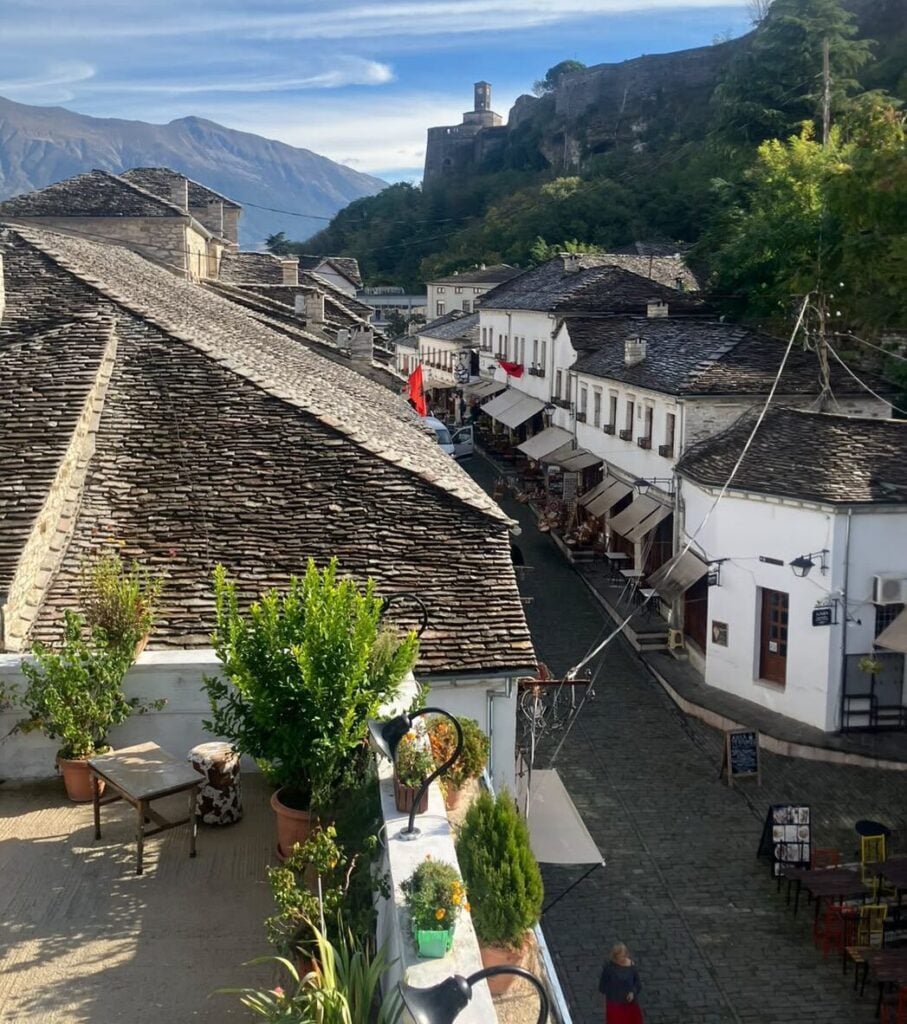
At half term, Nic and Juliette fulfilled a long-term wish to visit Albania – including the home city of one of their favourite authors Ismail Kadare. They were delighted to discover that they could visit the house where he was born which is now a museum in his honour.
2008 – Bath played host to an Albanian literary legend
We have always been huge fans of translated fiction at Mr B’s, and Nic and I have a particular fondness for the literature of Central and Eastern Europe and the Balkan peninsula. Soon after opening Mr B’s we came across the works of Albanian writer and winner of the inaugural International Man Booker prize, Ismail Kadare. We particularly loved and frequently recommended his book Broken April – an extraordinary story of blood feuds and revenge killings in the Accursed Mountains of the north, as well as his historical novel of Albanian resistance against marauding Ottoman troops, The Siege. We couldn’t believe our luck when we were offered the chance to host him for an event at Mr B’s in June 2008. As an author living in a dictatorship under a strict communist regime, many of his works were banned but he developed various ways to outwit the censors, using a mix of fable, allegory and coded messages. He eventually defected to Paris and returned later in his life to his homeland where he died in 2024. He is considered a national legend in Albania with streets named after him and statues and monuments erected in his honour.
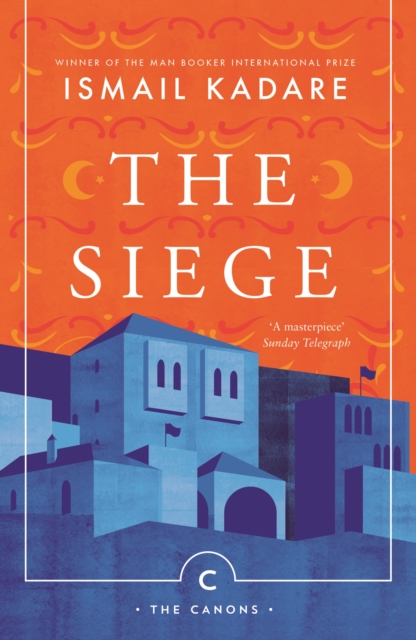
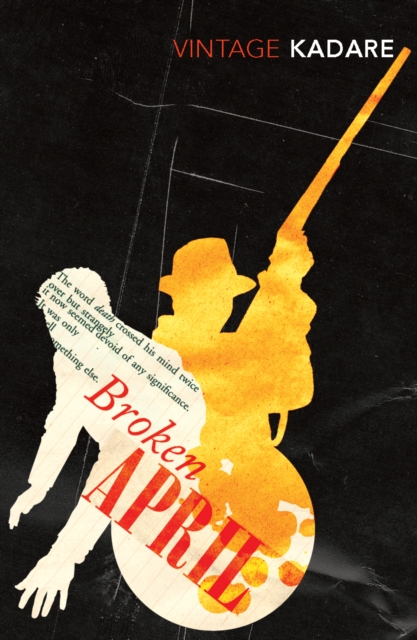
After his talk which we hosted at BRLSI on Queen Square, we took him to a nearby Italian restaurant for dinner where we had a wonderful chat.
As we talked, the waiter noticed his book on the table and got very excited – it transpired that he was a fellow Albanian and couldn’t believe he was serving one of his national heroes. The two of them shook hands and chatted animatedly in their local tongue. You can read more about it in Nic’s article about Kadare’s visit here A Tribute to Ismail Kadare – Mr B’s Emporium.
18 years later…
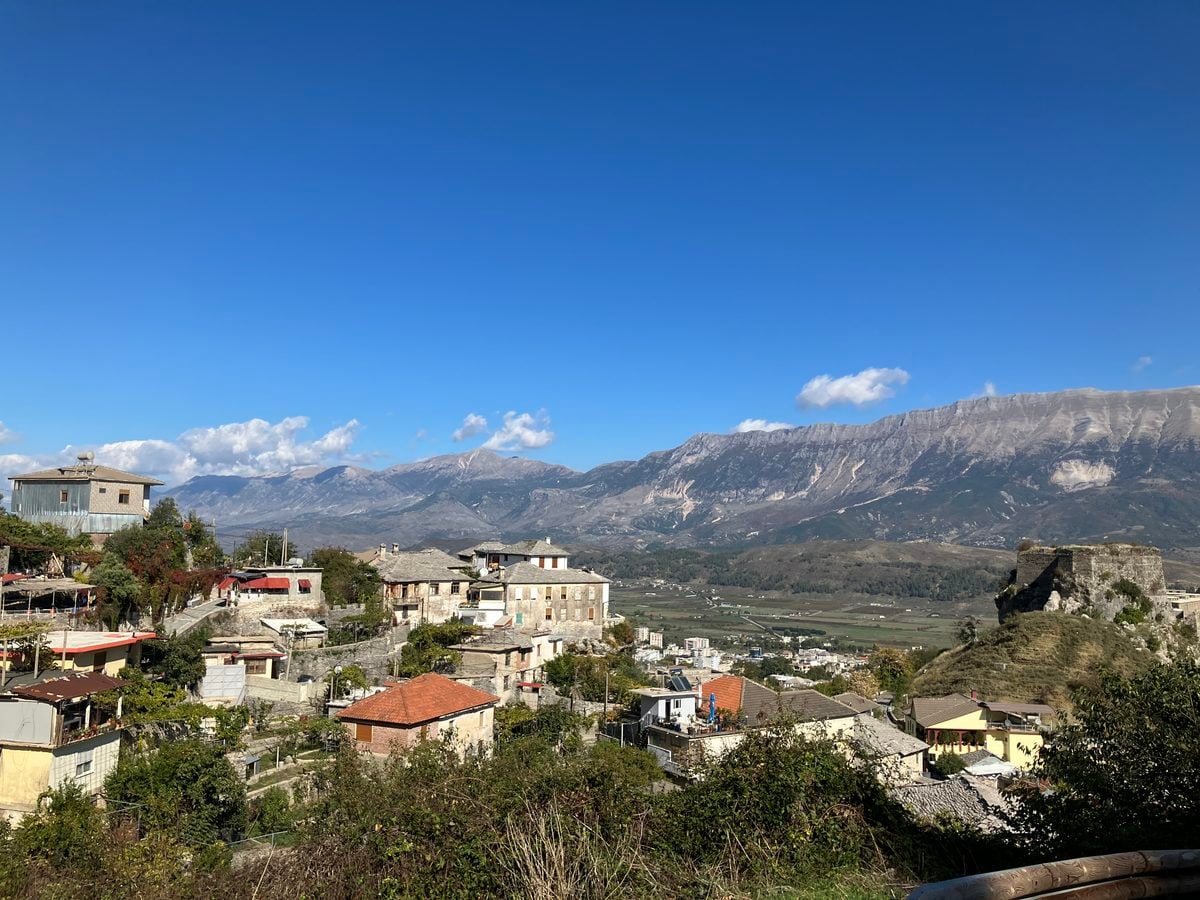
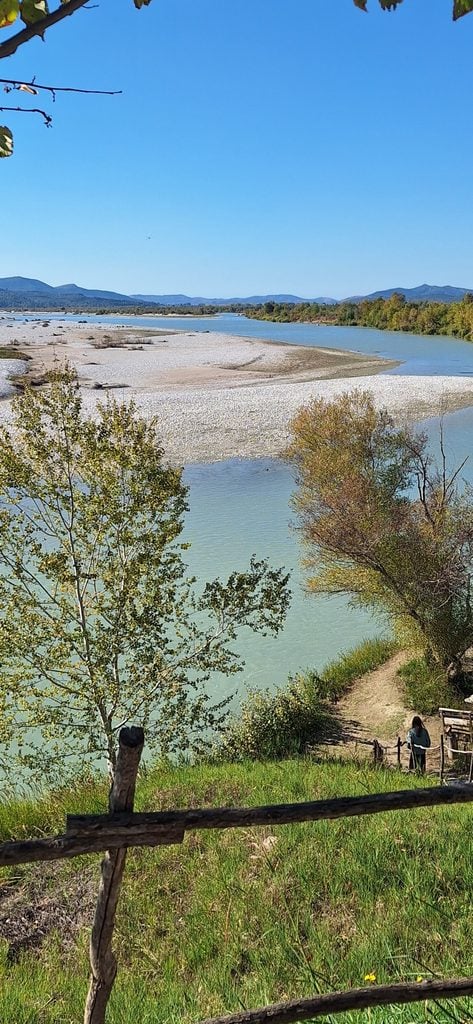
Nic and I have had Albania on our wishlist of places to visit ever since and this half-term we took the family on a short trip to explore a few of its highlights. Our priority was a visit to Gjirokaster in the south. Accessed through the spectacularly wide, almost Alaskan, Vjosa river valley, this was Kadare’s birthplace and the setting for a number of his books, including the quasi-autobiographical work “Chronicle in Stone”.
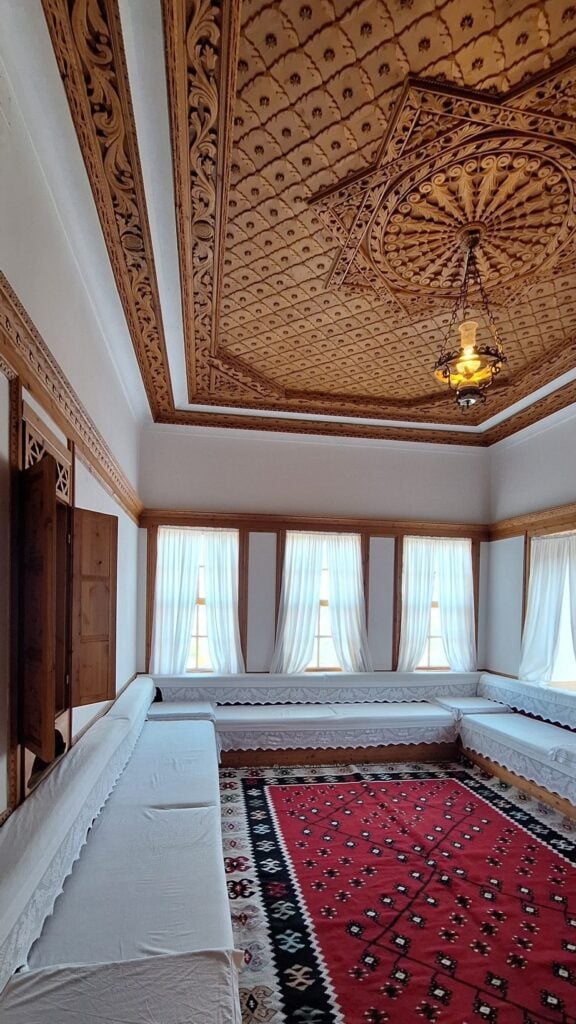
The small family-owned hotel we used as our base was itself on “Ismail Kadare Street” and not far away among the narrow, steep stony streets and nestled in the shadow of the vast rugged mountains, is the house where he grew up. It is now a museum in his honour and we were able to visit the bunker in the basement where he hid during the air raids, as well as his family’s “Oda” – the traditional Albanian room used for entertaining – with its intricate carved wooden ceiling, low divans, fireplace and kilim rugged floor.
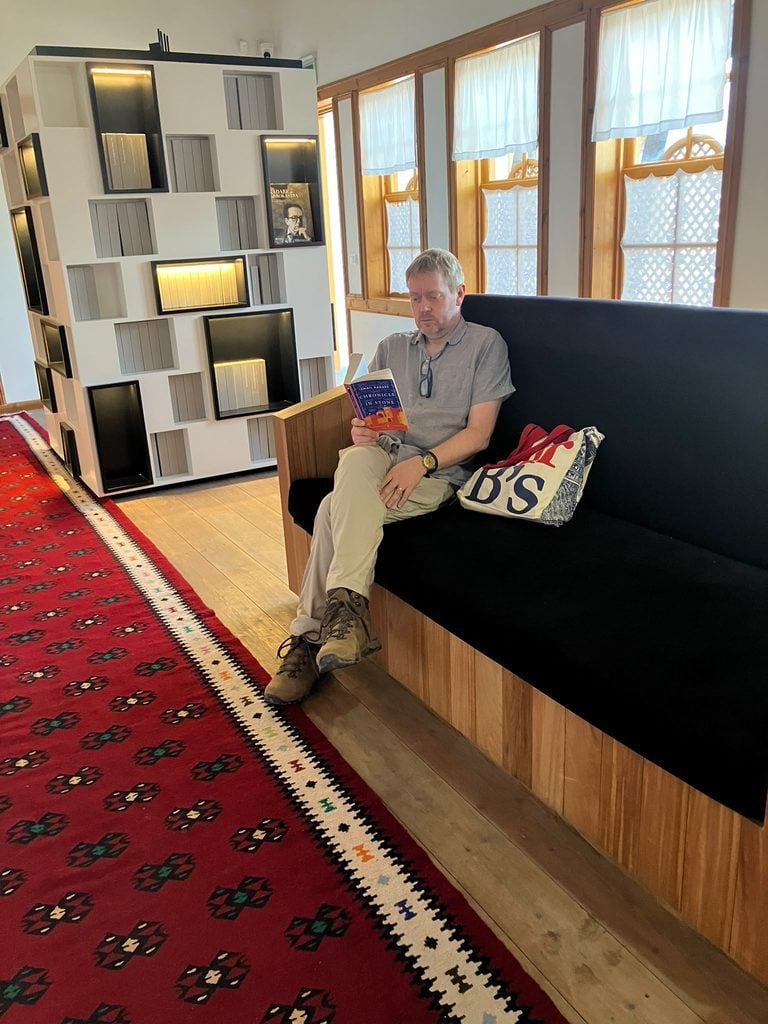
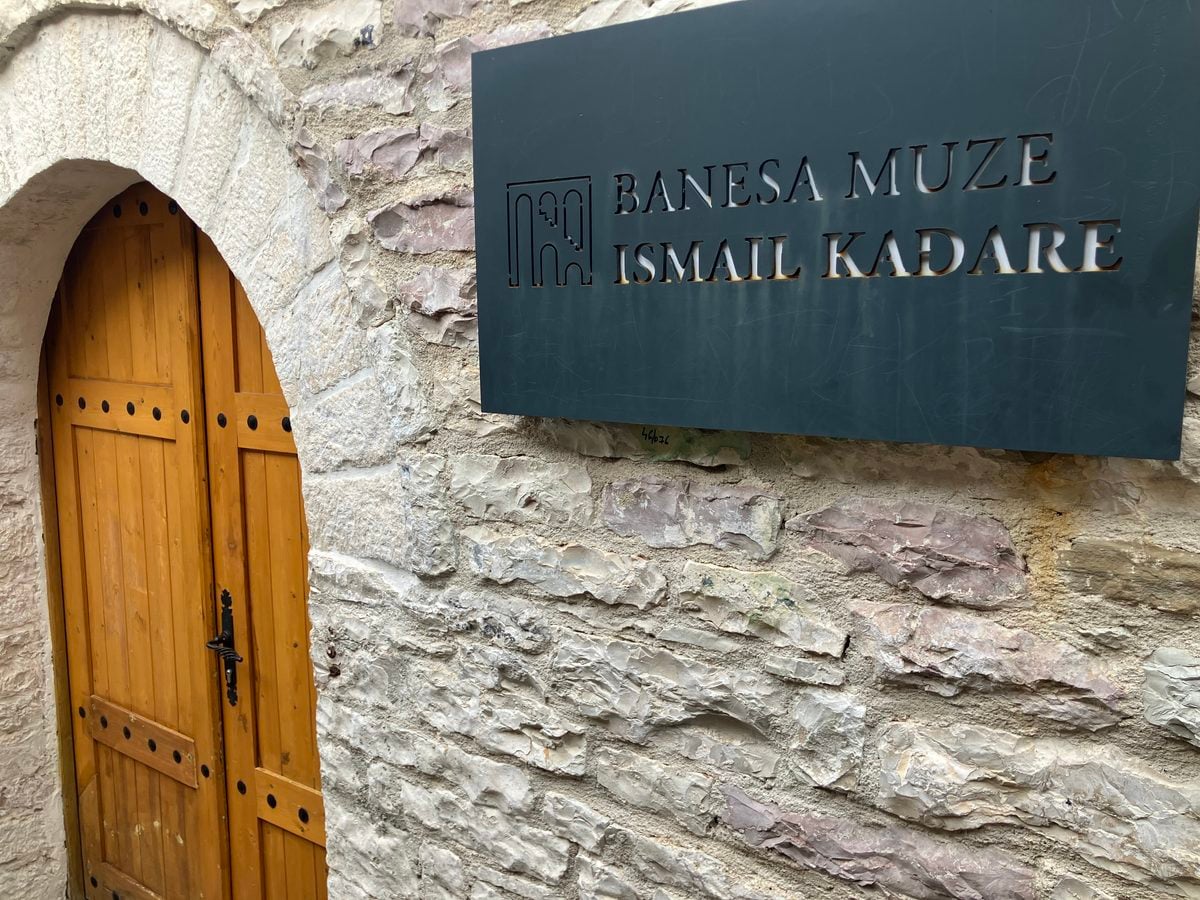
As a book set in the early 1940s, Chronicle in Stone is littered with the sudden tragedy and upheaval of the onset of war and the absurd and often devastating in-fighting between partisan groups, as the city which is its main character changes hands between Italians, Greeks, Germans and the partisan groups that would ultimately become the brutally oppressive post-war Communist regime.
And yet that isn’t the main takeaway when you read it. Because we watch this all take place through the eyes of a young narrator (young Ismail in truth), the overriding impression is an often-funny book about adults preoccupied with traditions and local outrages and young boys fascinated by planes and threats and the shrapnel and scandal one might find in the stony backstreets. It’s full of food, love and resilience all observed in the cellars and from upon the stone roofs of the city.
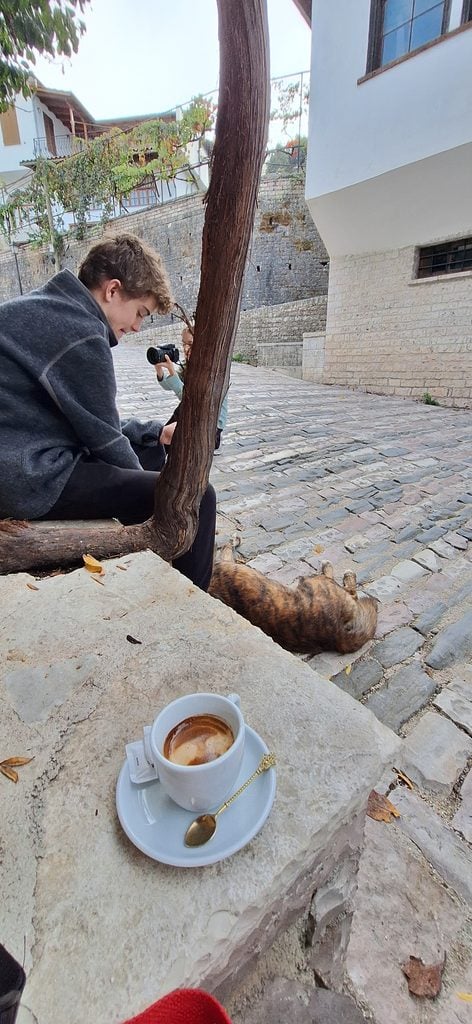
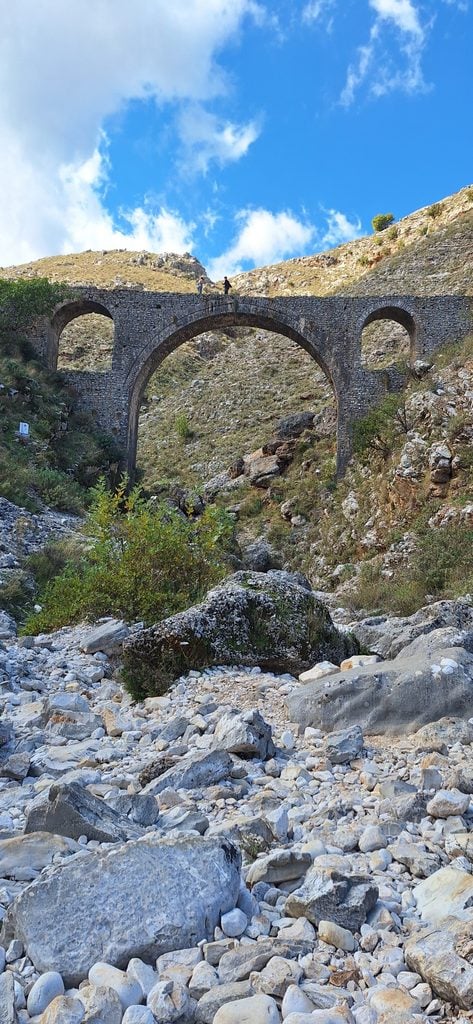
Spending time there now means sitting under maple trees sipping absurdly strong coffee, walking then crawling up vertiginous slopes to the city’s sudden upland edge and then through the flinty valley beyond and the spectacular remains of the Ali Pasha bridge, watching your kids pet an endless stream of stray cats and dogs that jostle with other visitors for the cushioned spots on the stone bench-seats outside inns and restaurants.
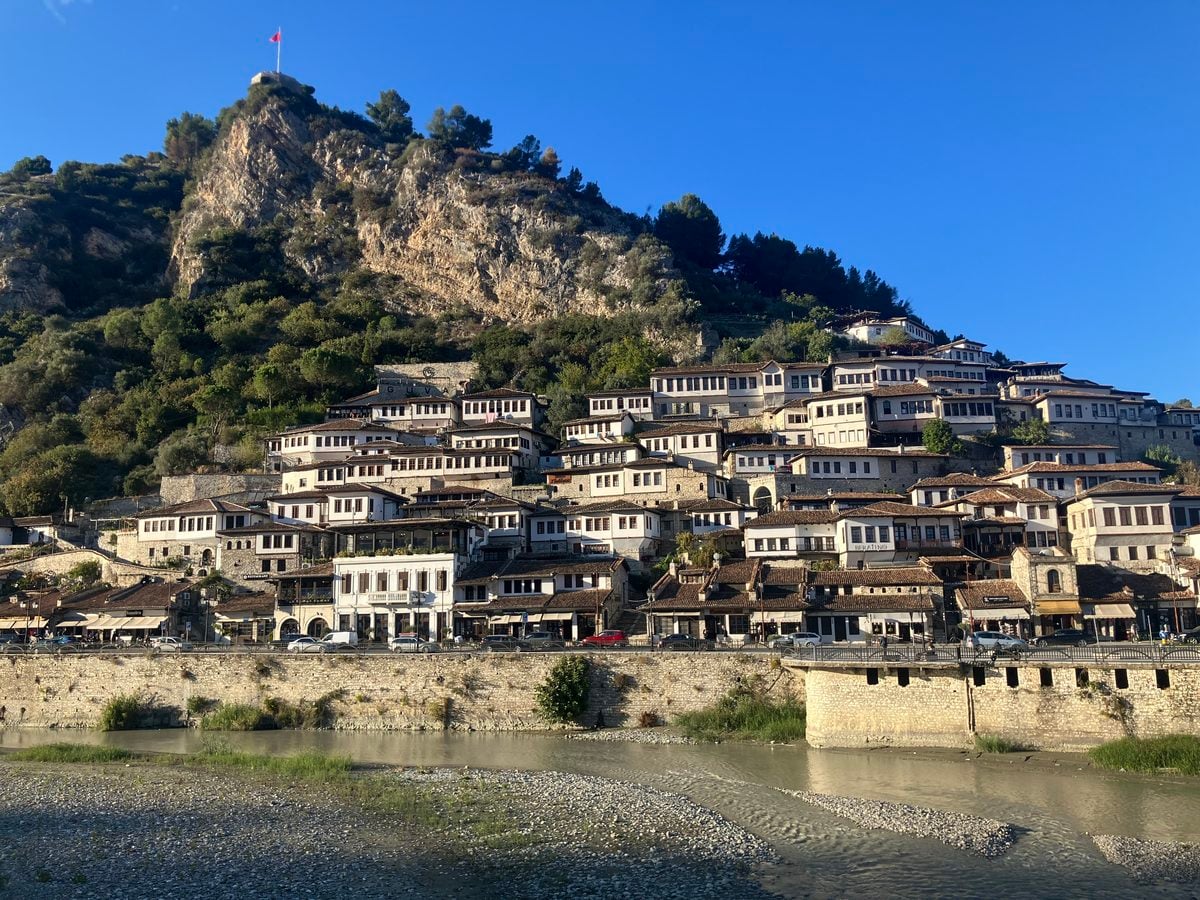
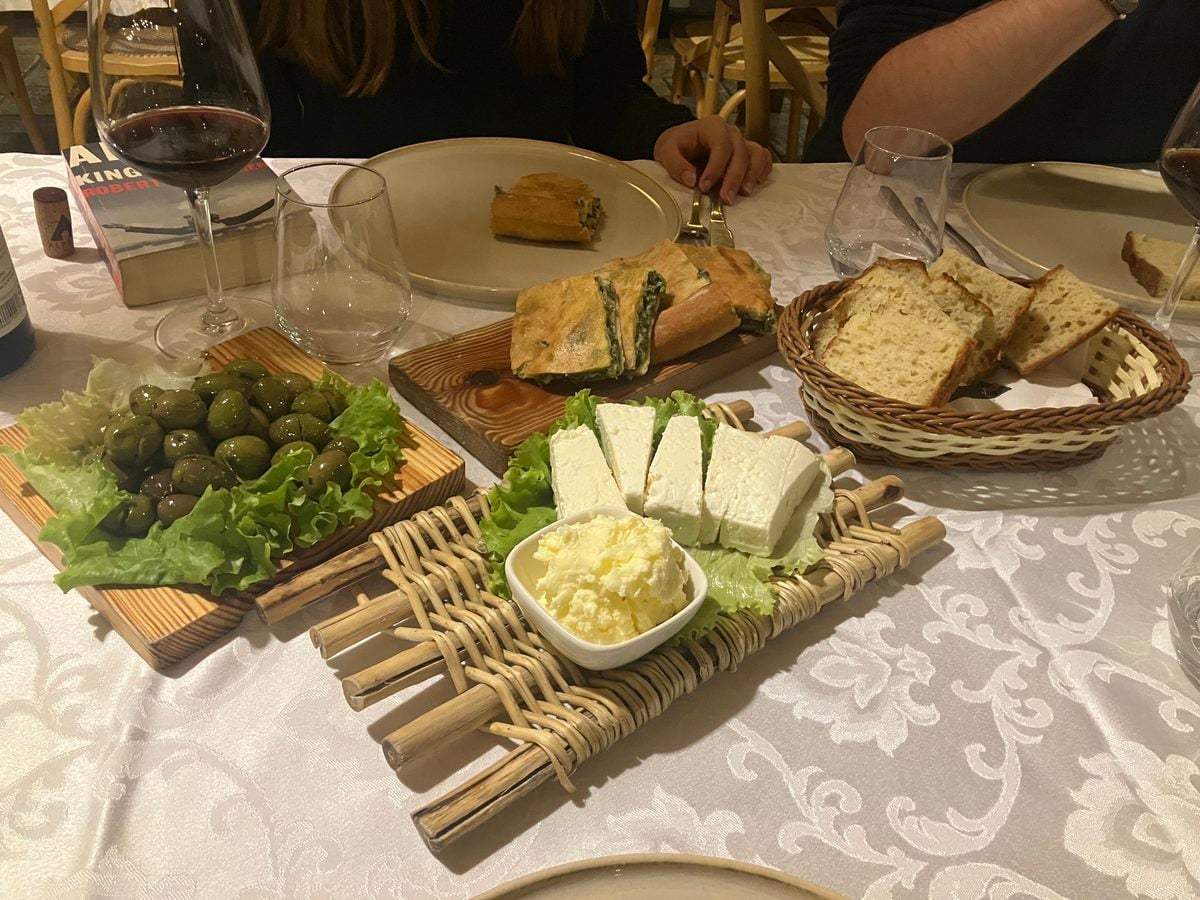
The whole centre is a UNESCO world heritage site, as is Berat, “the city of windows” three hours deeper into the hills which we also explored alongside the incredible food, wine, nature and hospitality of the villages in the countryside that surrounds it. We can’t recommend it enough, whether you visit in person or via the time capsule of Kadare’s words.