Welcome to the final Deep Read of 2026! To round off a year of great articles and essays, historian and author of In Rome’s Long Shadow, Jamie Gianoutsos, delves into Bath’s Roman history. Mrs B takes a trip down memory lane with a look at 20 years of Mr B’s Christmas Catalogues. And we deliver another set of books to hospitals as part of our Read For Good project…
Roman Hauntings

The spirit of Rome has haunted Bath for centuries, and not only because the city possesses famous waters. In 1773, the earnest poet and polemicist of American liberty, Mercy Otis Warren, penned a letter to a famed historian in Bath, asking if the ‘Genius of liberty’, which once animated England’s heroes, had in recent years forsaken the island or only ‘concealed her lovely form’ for a time.
The letter’s recipient, Catharine Macaulay, reassured Warren in her reply that the ancient Goddess of Liberty still left some traces of her former residence, even in Macaulay herself. Across the 1770s, Macaulay would become increasingly controversial as a female historian, polemicist, and ‘Friend of Liberty’. Her multi-volume History of England defended the beheading of King Charles I in England’s seventeenth century as an act of revolutionary liberty. Macaulay in letters and pamphlets publicly advised those building republican governments across Europe and America to model their constitutions with ancient Rome in mind. While living in Bath, she posed numerous times for paintings, engravings, and sculptures which depicted her as Roman matron, as Roman senator, and even as muse of History. A 1768 poem celebrating Macaulay argued that the Goddess of Liberty indeed possessed this woman and controlled her pen.
Fantasies of the haunting ghost of Liberty are surely not what many of us imagine for the afterlife of ancient Rome. Our contemporary stories most often revolve around gladiators and pillaging legions, imperial splendour and creaking architecture – coliseums, pillars, forums, and baths. But for revolutionaries in the sixteenth, seventeenth, and eighteenth centuries, Roman stories possessed an animating spirit of freedom.
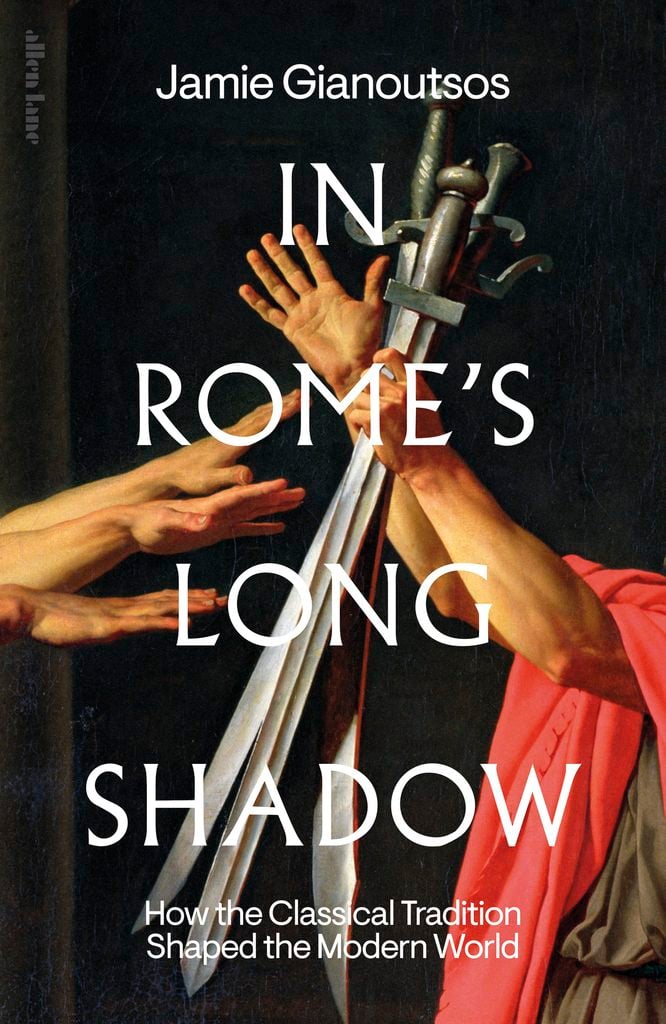
My new book, In Rome’s Long Shadow: How the Classical Tradition Shaped the Modern World, tells these stories central to Roman conceptions of freedom, tyranny, citizenship, slavery, and conquest. Each chapter then explores Roman afterlives through later traditions of liberty in Italy, England, the Dutch Republic, America, France, and Haiti. We follow the transformation of the Spartacus tale from rebellious gladiator to universal liberty fighter; examine how republicans touting the common good grappled with the rise of capitalism; consider how modern freedoms of press and speech could claim ancient warrant.
Even though I have been an historian of republics for nearly two decades, I am not the kind of person that one might usually associate with an obsession for Roman things. Growing up in rural West Texas, an evangelical minister’s daughter, far from Greco-Roman statues or ancient baths, I only first encountered Rome while passing dog-eared copies of Shakespeare’s Julius Caesar around my public high school classroom. My very worried English teacher kept repeating the firm warning that we were not to ‘glamorise’ nor get any ideas from the suicides found within the play.
At the age of 15, I hardly worried about the collapse of my republic, nor could I imagine the fears of terrorism, foreign wars, or remarkable polarisation of American politics ahead. And yet, that play still spoke to me with urgency and inspiration, in part because of those Roman suicides and what they meant. Marcus Brutus claims he assassinated Julius Caesar not because ‘I loved Caesar less, but that I loved Rome more’. Contrasting political freedom with slavery ,public sacrifice with private gain, Brutus argues for the necessity of Caesar’s death due to his ambition, an ambition which, left unchecked, would cost the citizens their republic. That the noble Brutus, for the sake of liberty, would run the same dagger through his own breast that he held against Caesar, inspired me greatly as a teenager. As I went to college and then completed graduate school in Northern Ireland, England, and America, I found many in our shared past who wished they had been born Greek or Roman.
Through researching this book, I learned that the story of Caesar’s assassination and other Roman tales greatly animated many American women before me. Across the 1770s, as the colonies declared independence and war with Britain, Abigail Adams adopted the pen name of Portia (Brutus’s wife). Her friend, Mercy Otis Warren, dreamed and worried with Adams, Macaulay, and other female ‘Friends of Liberty’, as to whether they had the Roman spirit necessary for the sacrifices ahead. In rapturous tones, Warren wrote to Hannah Winthrop with great hope that a free government, established on equality and virtue, might be built in America, even as she feared the loss of husband, sons, and friends on the battlefield. ‘While I feel greatly concerned for the welfare of my country,’ Warren confided, ‘my soul is not so far Romanized but that the apprehensions of the wife and the mother are continually awake’.
In Rome’s Long Shadow tells these stories and many more, inviting us tore consider how the Roman imagination inspired legions as well as slave revolts, men as well as women. Perhaps most surprisingly, unlike Shakespeare’s Julius Caesar, my outlook and my book are deeply hopeful. I want this book to light anew spark of ancient imagination, reminding us of the narratives and ideas we have lost and might re-found. How might we be haunted with ancient liberty again?
By Jamie Gianoutsos
Jamie Gianoutsos is Professor of History at Mount St. Mary’s University in Maryland. In Rome’s Long Shadow, her first book to be published in the UK, is out on November 5.
Pre-order In Rome’s Long Shadow now!
Two Decades of Christmas Catalogues
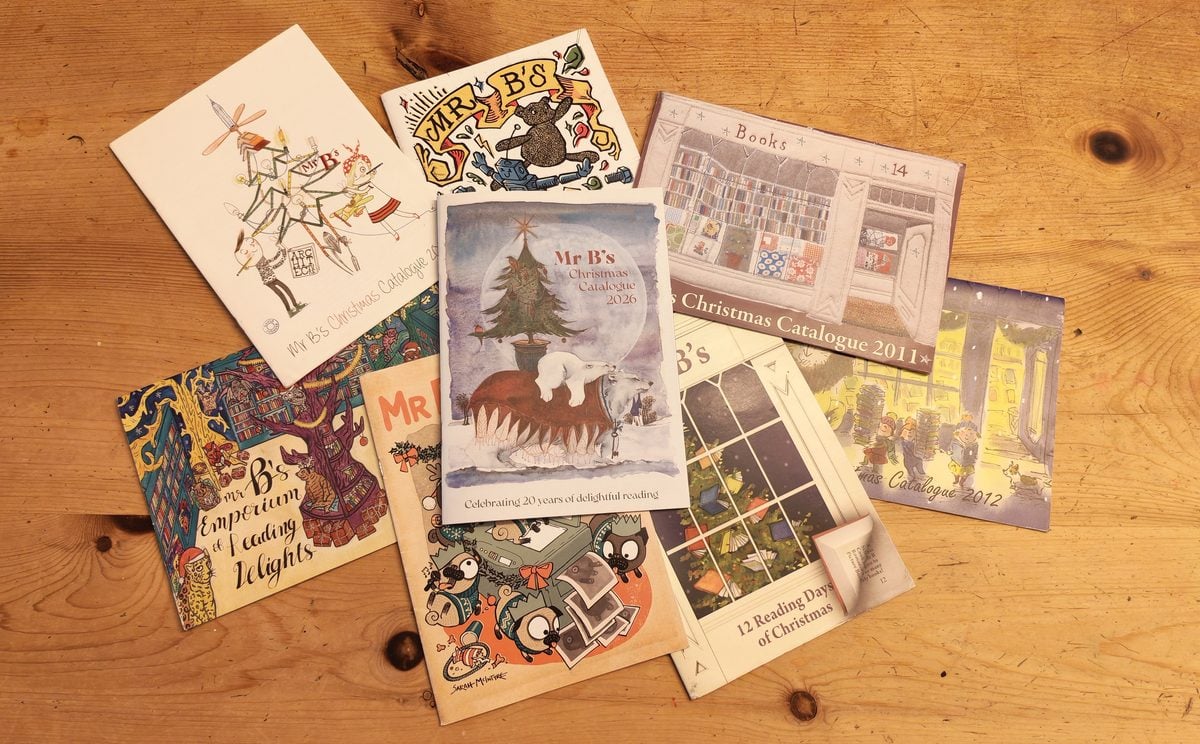
Of the many creative projects that we’ve thrown ourselves into whilst running Mr B’s, one of the most rewarding and fun has been the annual creation of our very own Christmas Catalogue.
In line with our ethos of careful curation in the shop, right from the start we wanted our festive catalogue to reflect our recommendations and respond to what we felt our customers would enjoy. We were keen to review everything ourselves too, rather than just copying out the publisher blurb and so we embarked on our first ever catalogue.
Our meagre start-up resources coupled with our basic-at-best IT skills meant that the design of the first catalogue was not the most professional. After carefully choosing which books to include in it, we tried our best on a WORD document to create a little pamphlet, using festive clip-art images along a “12 days of Christmas” theme. We printed it ourselves in the shop basement and were so worried about the cost of printer ink that I think we only printed a few dozen and quite possibly half of these had a few pages printed upside down!
But we had such a positive response to it and managed to create quite a buzz with our catalogue-linked in-store displays, that we knew we wanted to up our game the following year. As luck would have it, one of our regular customers happened to be artist and author Jackie Morris. Perhaps because she is so generous or perhaps because she was so appalled at our previous clip-art offering – who knows? – but she was persuaded to draw us a gorgeous cover image for our 2007 catalogue. We still have the original black and white pen drawing framed in pride of place in our office!
This was the start of what would become a tradition of asking illustrators whose books we loved to create an original image for our front cover and boy, have we had some corker covers! From an enormous an lion outside Mr B’s by Helen Stephens to Iggy Peck’s very own Mr B’s Christmas tree by David Roberts. From last year’s sledging donuts by Neill Cameron to Sarah McIntyre’s pugs photocopying their bums at the office Christmas party. Each year brings whoops of joy to the Mr B’s office with the cover reveal and we couldn’t be more grateful for these amazing and very busy illustrators for taking the time to create these for us.
This year will mark our 21st catalogue, and we persuaded Jackie Morris to once more create our cover, in a heart-warming, full circle moment.
While now professionally printed and looking very fancy, the Mr B’s Christmas Catalogue remains the same labour of love at its core – full of hand-picked titles (with hours of debate amongst the team about which books should be included) as well as endless hours tinkering with design elements. We hope you’ve enjoyed perusing them as much as we have enjoyed creating them.
By Juliette Bottomley
Click here to check out our latest Christmas Catalogue!
Hospital Drop-off
We recently announced that not only have we made Read For Good our new charity of the year, but also that we have teamed up with them and the Penguin Random House Bookshop Grant Scheme to get books to children in hospital.
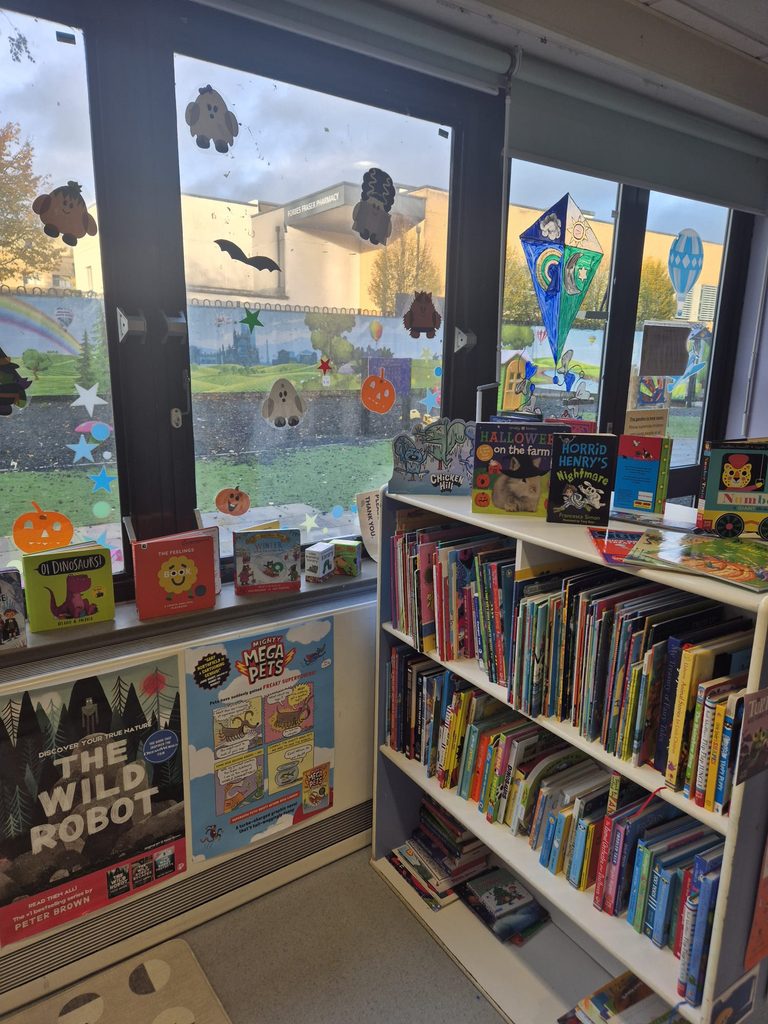
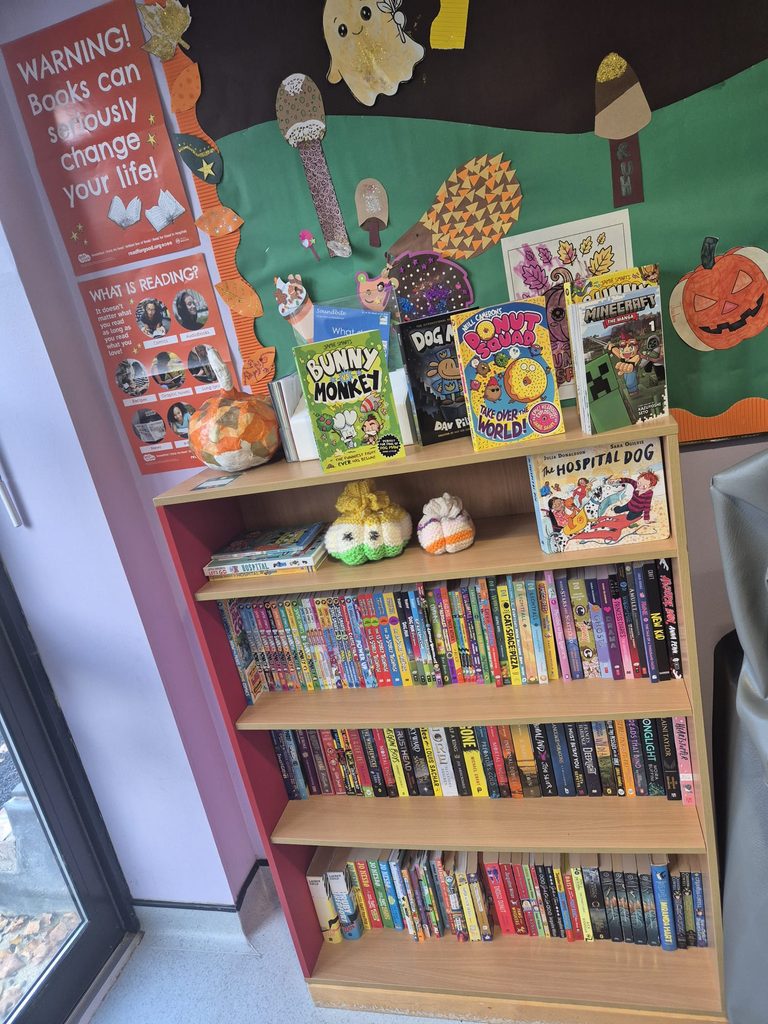
Having just completed our third round of book deliveries to local hospitals, we thought you’d like to see how things are going. Below are images of the new book area for children at Bath’s Royal United Hospital, after our Becky did her lates drop off this week!
And don’t forget, Becky is running the London Marathon next year in aid of Read For Good – you can sponsor her here!