Welcome to this month’s The Deep Read, where you will find news and reviews from the Mr B’s team and beyond. This month, we celebrate National Poetry Day with historian Catherine Clarke, and Kate collates novels about tinkling the ivories…
Catherine Clarke on Britain and Poetry
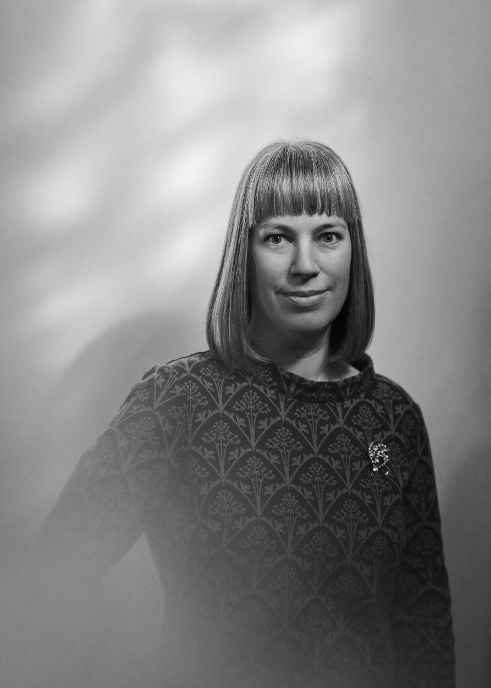
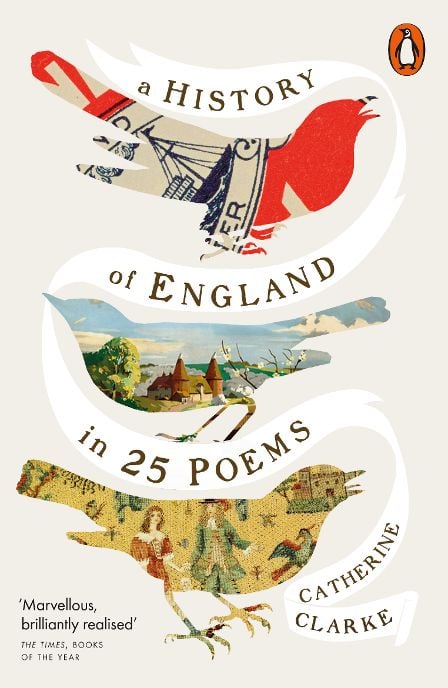
October begins with National Poetry Day – an annual celebration, with over 1.5 million people participating across the UK. But perhaps, at first glance, ‘National’ and ‘Poetry’ seem unlikely words to hitch together. What has the ‘national’ got to do with poems and poetry? It turns out – rather a lot. In my book A History of England in 25 Poems, I’ve written a new history of England, told through 25 remarkable poems written between the eighth century and today. They take us on time travel into moments in England’s past – and reveal how poetry has always been intimately involved in shaping – and troubling –ideas of England and Englishness.
The poem Queen Victoria read after the death of Albert, which tries to make sense of new scientific knowledge alongside religious faith and consolation. Guerrilla poetry written in English after 1066, holding William the Conqueror to account. Verse which takes us below stairs in an eighteenth-century country house – penned by a housemaid dismissed for scribbling when she should have been turning the spit. A box of matches and the 1984-5 Miners’ Strike. These poems don’t just take us into the events of history, but inside the experiences, feelings and imaginations of those who lived through it.
Through 1300 years of history and poetry, I’ve investigated the stories we tell about ourselves, and how poetry has been involved in forging ideas of nationhood. From the words of an illiterate cowherd, Cædmon, in the eighth century, via great figures like Chaucer and Shakespeare, but also less well-known writers like Anna Laetitia Barbauld and her brilliant activist poem Eighteen Hundred and Eleven, poetry shows us England in the making: always colourful, always contested.
One thread I follow through the book is that iconic imaginary of England as the ‘green and pleasant land’: an idea going back centuries before William Blake’s ‘Jerusalem’, to Bede and beyond. I listen in on the poems I’ve selected as they speak to each other across the centuries, offering their own twists on this powerful imagery. The final choice in my book, Zaffar Kunial’s wonderful 2022 poem ‘The Groundsman’, talks back to literary tradition through its description of an overgrown cricket pitch in high summer, asking: what now, for England?
Tracing 1300 years of England’s history through 25 poems was an adventure in scale and storytelling. Writing the book, I found it thrilling to use short poems to open up big stories about who we are. Like Edward Thomas – whose beloved poem ‘Adlestrop’ I use to tell the story of the Great War – I believe that we find the truth about ourselves in ‘the little things’.
Poetry is a revelatory and transformative way into history because it doesn’t start with big statements, headlines, or banners and flags. It begins at the smallest scale, with the most immediate, intimate encounters with voices throughout our past. ‘National’ and ‘poetry’? It’s a dialogue that’s been going on for 1300 years, and I hope my book will invite readers to join the conversation.
By Catherine Clarke
Catherine Clarke is a Professor at the Institute of Historical Research, University of London, and Director of the Victoria County History of England. She was previously Professor of English Literature at the University of Southampton, where she remains a Visiting Professor. Her latest book, A History of England in 25 poems, is published by Penguin.
Buy A History of England in 25 Poems now!
Striking a Chord
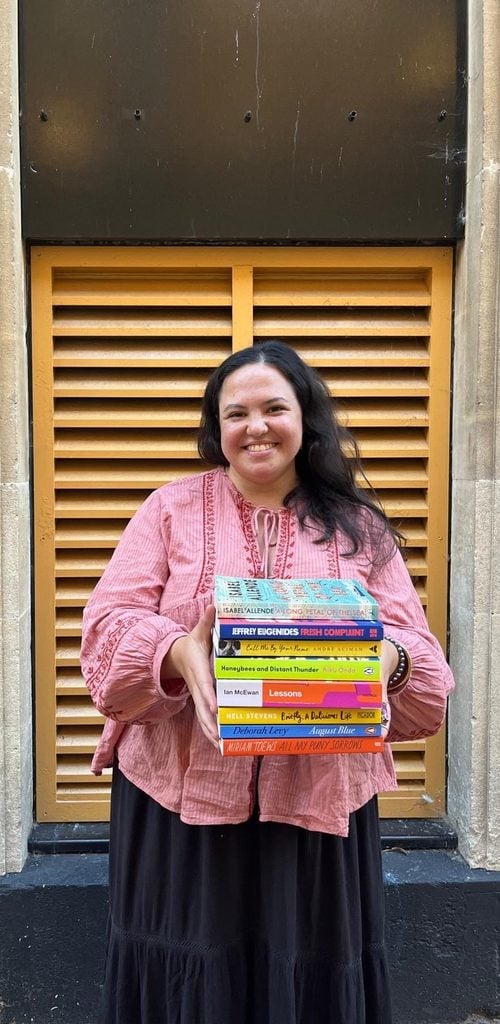
If I had a penny for every book about pianos I love, I’d have at least ten pennies. Which isn’t a lot, but it’s a strange coincidence that so many of my favourite novels centre around pianists: disgraced, world-famous, aspiring, haunted, inspired. With the publication of the great Barbara Kingsolver’s new novel, Partita, I thought I’d make a list of the key (ha, ha) piano reading we have loved.
In August Blue, Deborah Levy’s piano virtuoso Elsa M. Anderson finds herself walking off the stage mid-performance. She’s at the height of her career, and the ripples of gasps slowly fade into a dizzying meander around Europe.
Kazuo Ishiguro’s The Unconsoled is a strange and wonderful masterpiece of a pianist revisiting a city to give a performance which may or may not be important in a variety of ways. Similarly to Levy’s novel, this one slips in and out of focus, leaving an atmospheric portrayal of desire and performance.
All My Puny Sorrows, by Miriam Toews, is a firm Mr B’s favourite and (in my humble opinion) one of the most beautiful books ever written, about a world-class pianist who wants to die and the sister who keeps her alive.
Isabel Allende started writing A Long Petal of the Sea after meeting the doctor who inspired her main character, Victor. In the novel, he travels with his sister-in-law, a budding pianist, from war-torn Spain to Chile on a boat chartered by the poet Pablo Neruda.
Sophy Roberts’ investigative journalism takes her to Siberia, where, dotted around the remote landscape, she finds pianos that tell stories of their histories, in The Lost Pianos of Siberia. Also a Mr B’s favourite, you’ll always find a Sophy Roberts book on Sam’s top books shelf.
Admittedly, I’ve strayed a bit in favour of one of my favourite short stories, Early Music, which centres around a clavichord rather than a piano. Jeffrey Eugenides (of Virgin Suicides and Middlesex fame) creates such a lasting impression of a man whose dreams of being a musicologist have failed that I still think of Rodney now, years after first reading the story.
Barbara Kingsolver’s Partita (out on October 6th) joins that company. It follows Livia, a woman from a rural Appalachian community who once studied piano seriously and now teaches it. When a lover she hasn’t heard from in twenty years gets in touch, she has to look back at who she was when she studied music.
The piano makes for a beautiful piece of narrative furniture – it’s funny how many of these books are not about the instrument itself, or sometimes even about the characters who play them. Despite living worlds and decades apart, the piano makes room in these books for ambition, escape, grief, exile, joy.
Have you got a favourite, or one we’ve missed out? See the full list here!
By Kate Padiachy