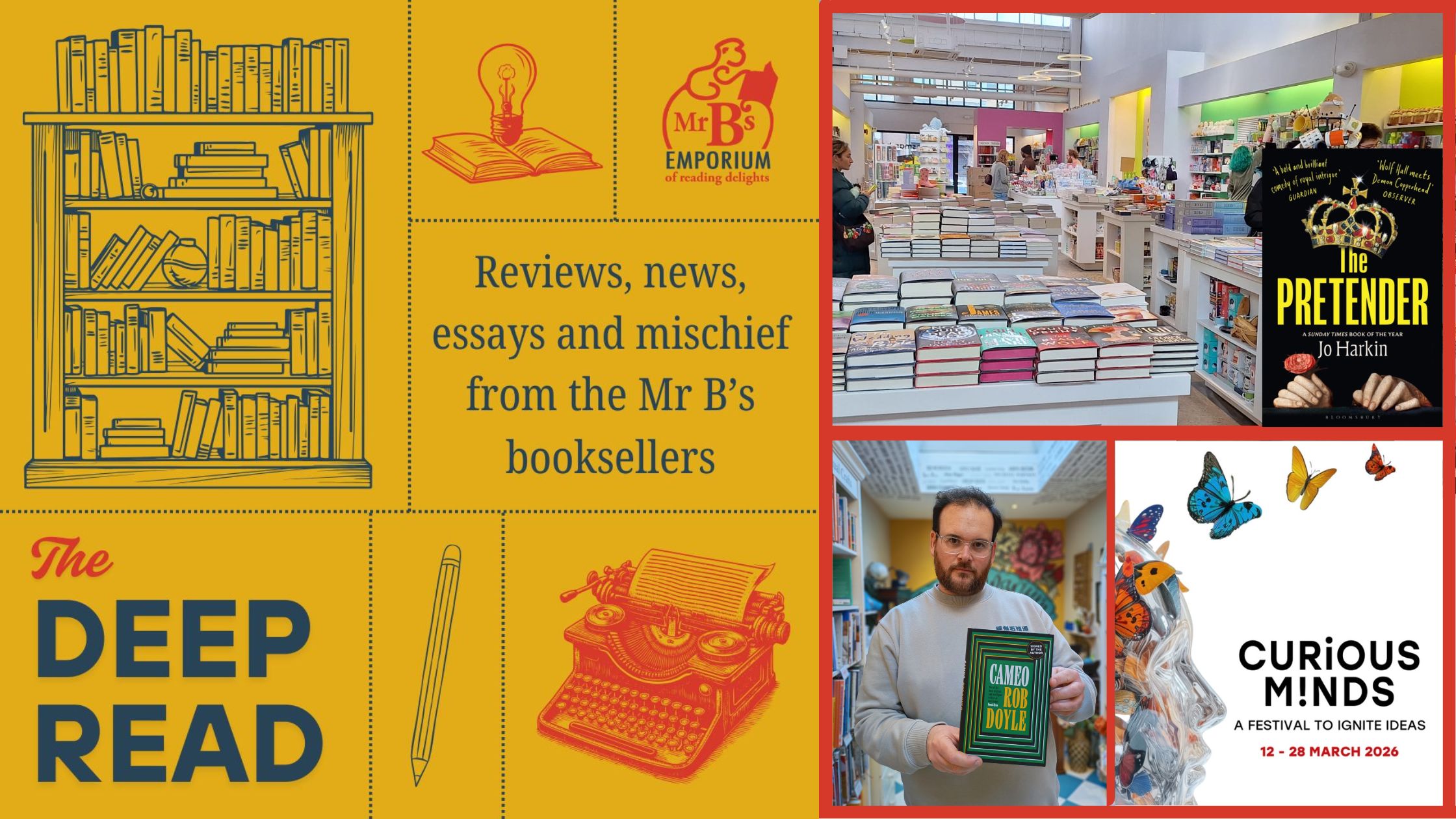
The new issue of The Deep Read is here, where you can find out what the Mr B’s team have been up to, including news, reviews and more!
This month, Tom has been pondering meta novels, Nic has been in the US, and Juliette is getting excited about some new historical fiction. Plus prize lists, festivals and more…
Truths, Untruths, Labyrinths & Footnotes: A Journey into the Metafictional
I was convinced to buy a copy of Rob Doyle’s new book Cameo after hearing him on the Take Four Books podcast, where he sings the praises of both Jorge Luis Borges and my beloved Roberto Bolaño: take my money, let’s see what you have to say.
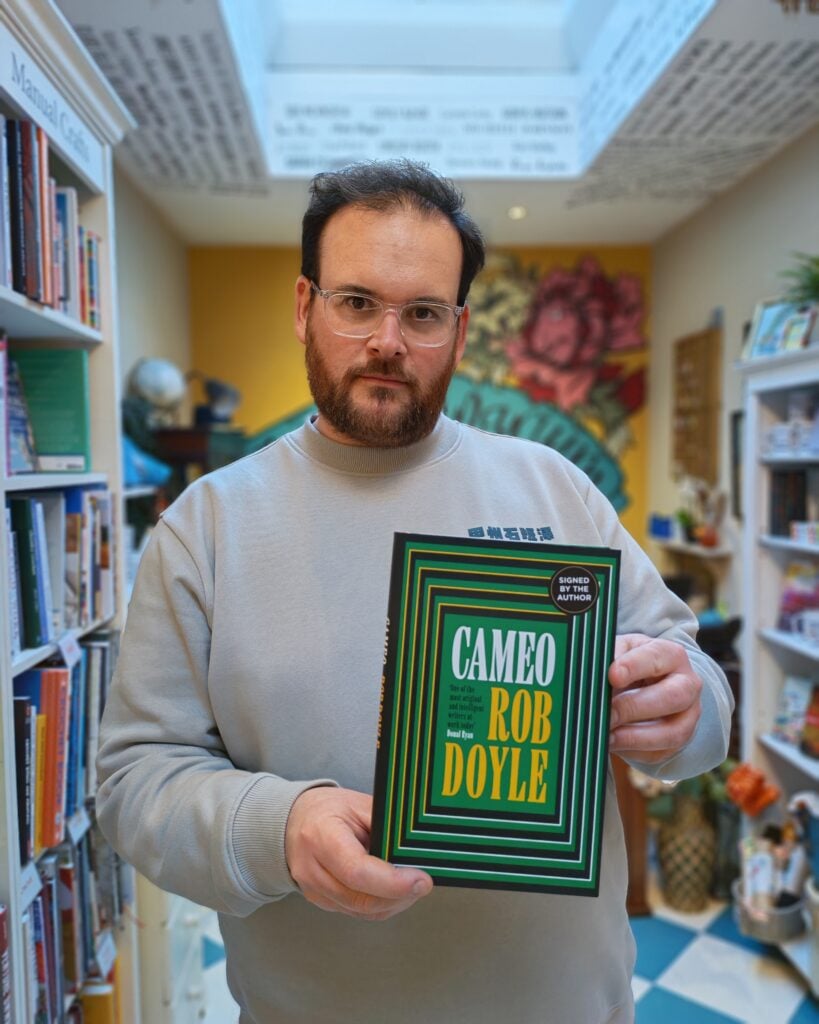
As I have no doubt Borges would have approved of, Cameo is a labyrinth: a novel about a novelist who writes novels about a novelist who writes novels, commented on throughout by other novelists. This meta work is bookended by interviews with the fictional, unnamed creator of the Ren Duka novels, a cycle of hilarious and audacious stories that take in every genre and defy them all, starring a hapless Irish novelist whose sudden success thrusts him into the limelight.
A social satire of epic and layered proportions, I couldn’t help but think of Percival Everett at his most playful, while the influence of Bolaño and his obsessions is evident throughout.
There is a danger with novels of such ambition and texture that they turn out to be tiring or dry, but Cameo ultimately shrugs off its references and influences to become entirely its own thing, providing a unique and pleasurable reading experience.
I have found myself being drawn to this kind of novel of late: where the truth fragments and realities collapse on one another. It is often said that in dark times – and we are now without a doubt living through one of those – people are drawn to otherworldly art as an escape from reality. But metafictional novels provide something else. Rather than escape, they offer an entropic experience, a world where reality loses its edge, where its boundaries are blurred and suddenly anything seems possible. This is at once unsettling and oddly compelling, the idea that everything might not be what it seems, if only we looked at it from another angle.
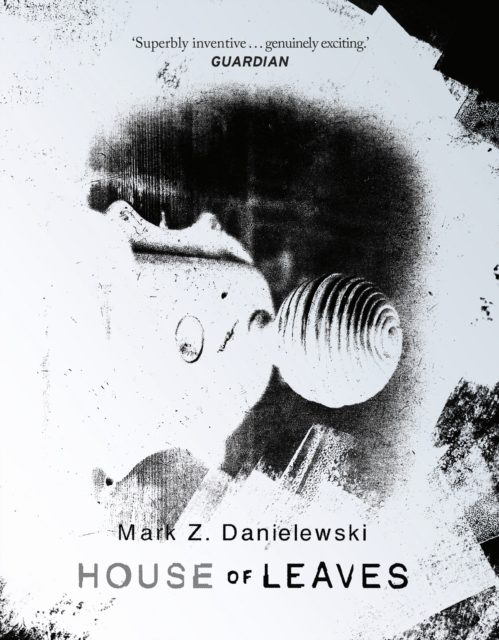
So where else can this kind of folding of reality be found in literature? The first place to look is the ultimate cult classic of meta novels: House of Leaves. Mark Z Danielewski’s spectacular tour de force – a labyrinth, within a labyrinth, within a labyrinth – immerses you in a number of realities where nothing and nobody is reliable, least of all the author. Combining elements of suspenseful gothic horror with a satire on academia, it is a reading experience like no other, from which you may never recover (I have heard tales of people burning the book, or throwing it away afterwards, so terrified were they with what this revealed about the world).
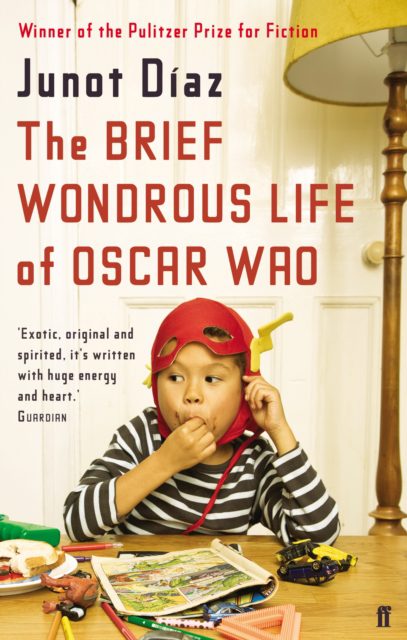
Another novel to appear a few years after HoL was Junot Diaz’s The Brief Wondrous Life of Oscar Wao. Ostensibly the story of Oscar, a nerdy Dominican kid growing up in New Jersey, it also plays out the recent history of his home island in numerous footnotes where we learn of the grip brutal dictator Rafael Trujillo had on the people. Told in slick, colloquialism-filled prose, Diaz’s Pulitzer Prize-winning masterpiece was the first great novel to appear in the 21st century.
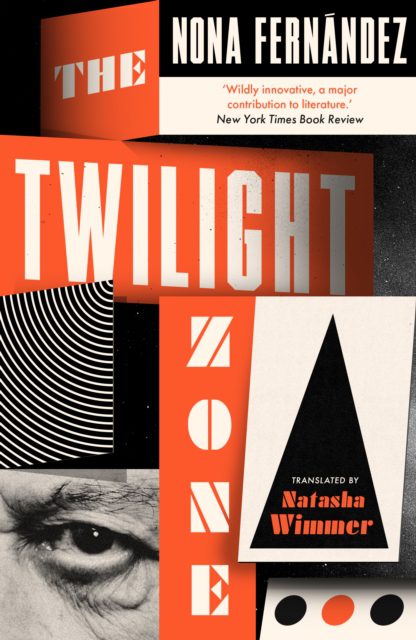
Chilean writer Nona Fernández’s The Twilight Zone opens with her unnamed narrator seeing the famous headline ‘I Tortured People’ blazed across a magazine cover in the early years of the century. This proves a catalyst for a reckoning not only with her own past, but that of the entire country, as everyone is forced to reassess the childhood stories they were told; who was that man who stayed in the attic? Why was her best friend picked up by an ‘uncle’ in a red sportscar? And what really happened in that house at the end of the street? Reality bends and breaks and is remade again, along with the memories of a generation.
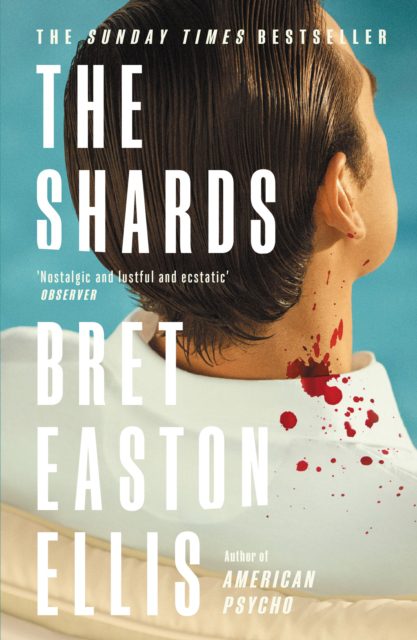
Bret Easton Ellis has long been a pro at constructing sly narratives, where fact and fiction blur, never more so than in his most recent novel, The Shards. The protagonist, Bret, shares almost all the characteristics of his creator: same school, same upbringing, same basic life story. But this version of Bret soon becomes mired in a seedy scandal of love, sex and murder, only some of which can possibly be true. Where does the fictional Bret end and the real Bret begin? Your guess is as good as mine, but it’s a lot of fun trying to work it out.
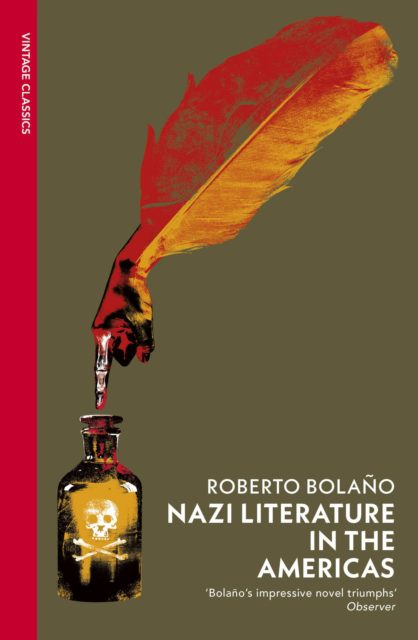
Of course, there are the old masters, too, who loved to play with these themes and toy with their hazy boundaries: Nabakov’s Pale Fire, Borges’s Labyrinths, Bolaño’s Nazi Literature in the Americas… the list goes on. For me, what connects many of these novels is their ability to depict the worst of humanity – genocides, wars, dictatorships, brutal murders – in a way that is playful and palatable, so we are able to digest their impact and rationalise it without being consumed from the inside. We could all do with some of that right now.
By Tom Mooney
Cameo by Rob Doyle is available now
On the Road Again
Last month Nic travelled to New Jersey to visit bookselling friends Christine and Vinnie Onorati, owners of Word Bookstores in Brooklyn and Jersey City, before taking a road trip across to Pennsylvania to represent the UK at the American Booksellers Association’s Winter Institute in Pittsburgh. Here’s what he got up to…
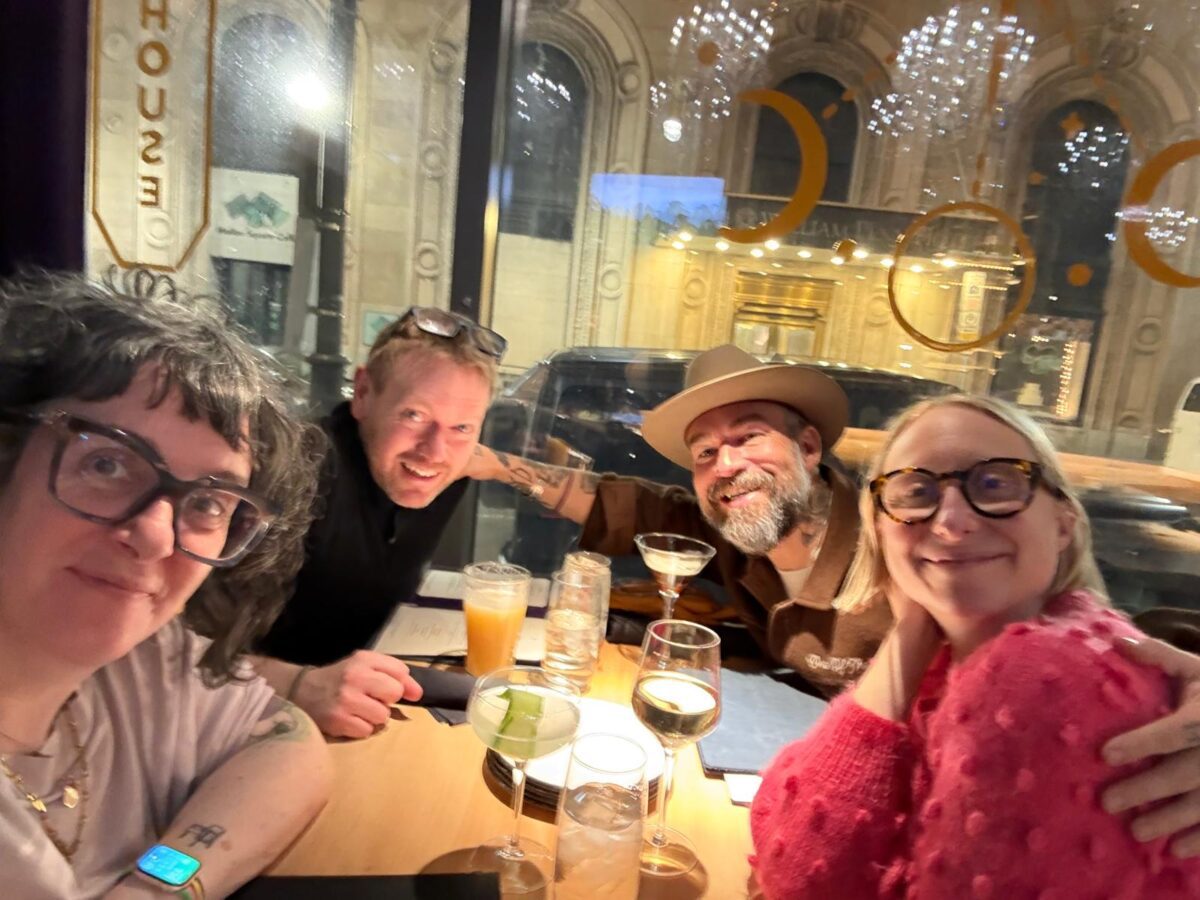
“I hung out with the team at Word Jersey City for an hour and did a little unsolicited hand-selling to some customers looking for guidance on classics. I was delighted to add the “Sell Grapes of Wrath in the US” badge to my bookselling achievement list!
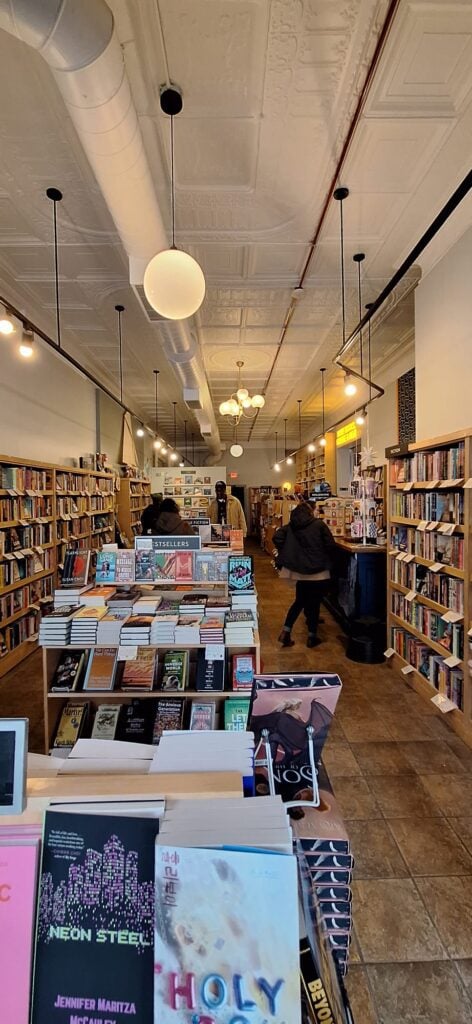
“Once on the road I dropped by Farley’s Bookshop in New Hope, Pennsylvania, a characterful and physically very long bookstore that’s been around since the 1960s. I picked up a copy of Wise Blood by Flannery O’Connor fresh from having seen it referenced as a Springsteen influence in Deliver Me From Nowhere the night before.
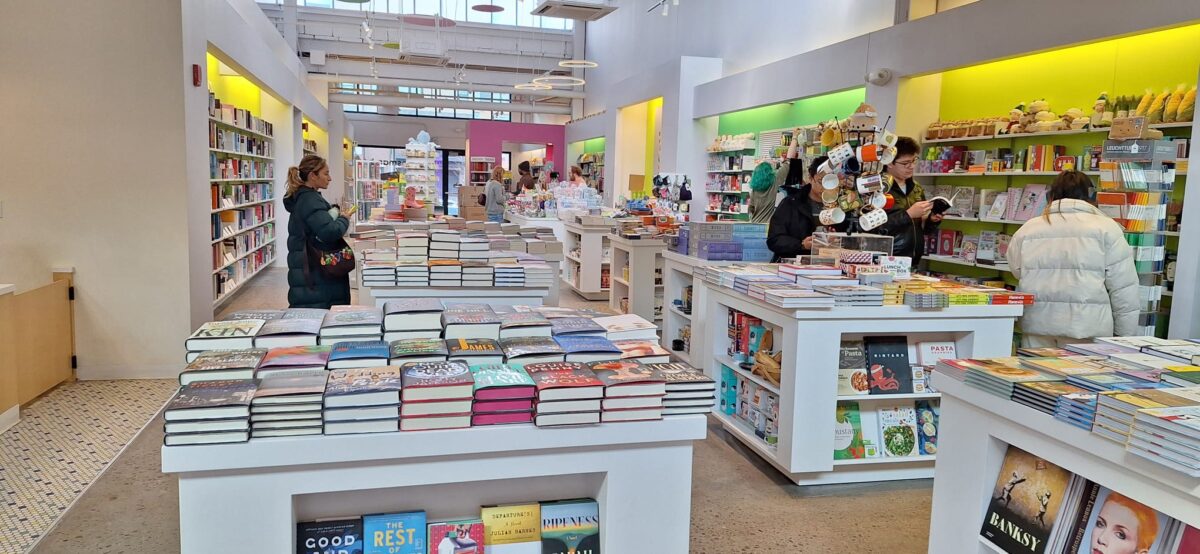
“Next up was Pittsburgh I went with Christine and novelist Emma Straub – also owner of Books are Magic in Brooklyn, NYC – to White Whale Bookstore, a fantastic two room store with a coffee offering and a brilliant programme for getting books into the hands of prisoners. We also visited the Pittsburgh branch of mini-chain Posman Books – complete with its own ice cream concession!
“At the Winter Institute, I met and chatted with some of our favourite authors, including Hernan Diaz, Marlon James (in a lift full of booksellers) and ex-Mr B’s bookseller-turned author Naomi Ishiguro. I also got to hear some colossuses of American fiction like Min Jin Lee and Colson Whitehead speaking brilliantly, and connected with and learned from booksellers from all around the U.S.
Apparently all these experiences made me an expert in American bookselling, so upon my return I hosted a session at London Book Fair last week interviewing Mira Braneck, of A Room of One’s Own, Madison WI, and Pierce Alquist, of Brookline Booksmith, about the challenges of bookselling in America in 2026 and the incredible work their politically and socially engaged shops undertake.”
By Nic Bottomley
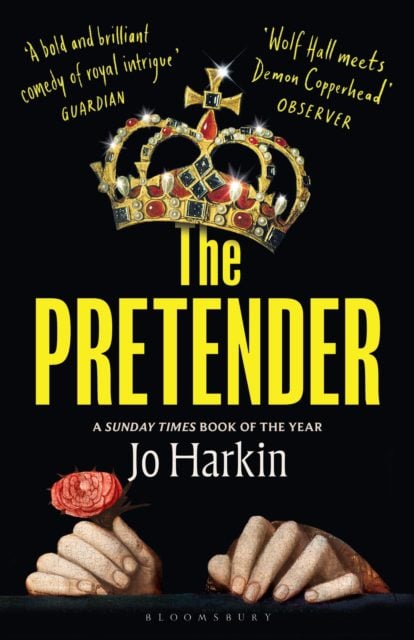
Juliette Reviews: The Pretender by Jo Harkin
A brutal and skullduggery-filled tudor novel, wrapped in its own black cloak of comedy. Unsuspecting young Lambert, trading daily insults with fellow pig farming boys, is plucked from peasant life and told he is actually the future King of England, swapped at birth for a common boy in order to shield him from assassination. Hurriedly schooled and taught the ways of a royal-to-be, he is furtively handed around and used as a pawn in dangerous power-toppling games – his own needs and desires dismissed as completely irrelevant.
Except Lambert is just a regular lad who is hitting puberty, who wants to make friends and understand what girls are all about. He misses his dad – or at least the person he thought was his dad – and definitely doesn’t want to be a king especially with all this talk about young boys being locked up in the Tower. As allegiances form and shatter around him, he is hidden first in France and then in Ireland. Plots thicken to topple the King and to bring Lambert (or Edward as he is now known) to the throne. Heads roll, backs are stabbed and new plots are formed.
No longer knowing whom to trust nor whom to love, young naïve Lambert/Edward must quickly learn some vengeful skills of his own. Based partly on real events around the War of the Roses, this is a book about power, ambition, identity and revenge but also about love in the face of it all. Full of barbaric, hilariously crude and treacherous meddlers and with a huge body count, it is also a coming-of-age novel that somehow manages to be extremely funny and tender – in a bloody, sweary, visceral kind of way!
By Juliette Bottomley
The Pretender is out in paperback on April 3
Other Bookish News…
- Mr B’s is currently selling books at Bath’s wonderful Curious Minds festival, which runs until March 28. They have loads of great events still to come, featuring the likes of Larry Lamb, Tessa Hadley, Claudia Hammond, and much more. Click here for tickets!
- The shortlist has been announced for the inaugral Climate Fiction prize, with Team B favourites Madeleine Thien, Robbie Arnott and Maria Reva making the cut. Browse the list here.
- The Dylan Thomas Prize, awarded to the best piece of fiction by a writer under the age of 39, has been announced, with a stellar line-up including Sean Hewitt and Derek Owusu. Browse the list here.