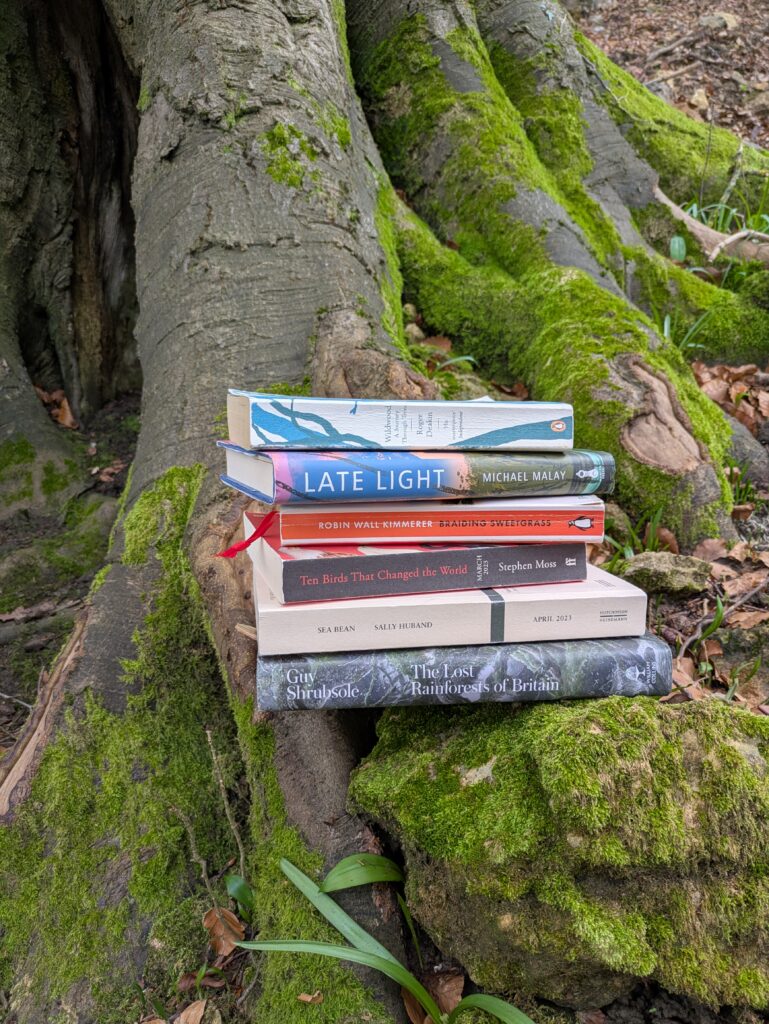
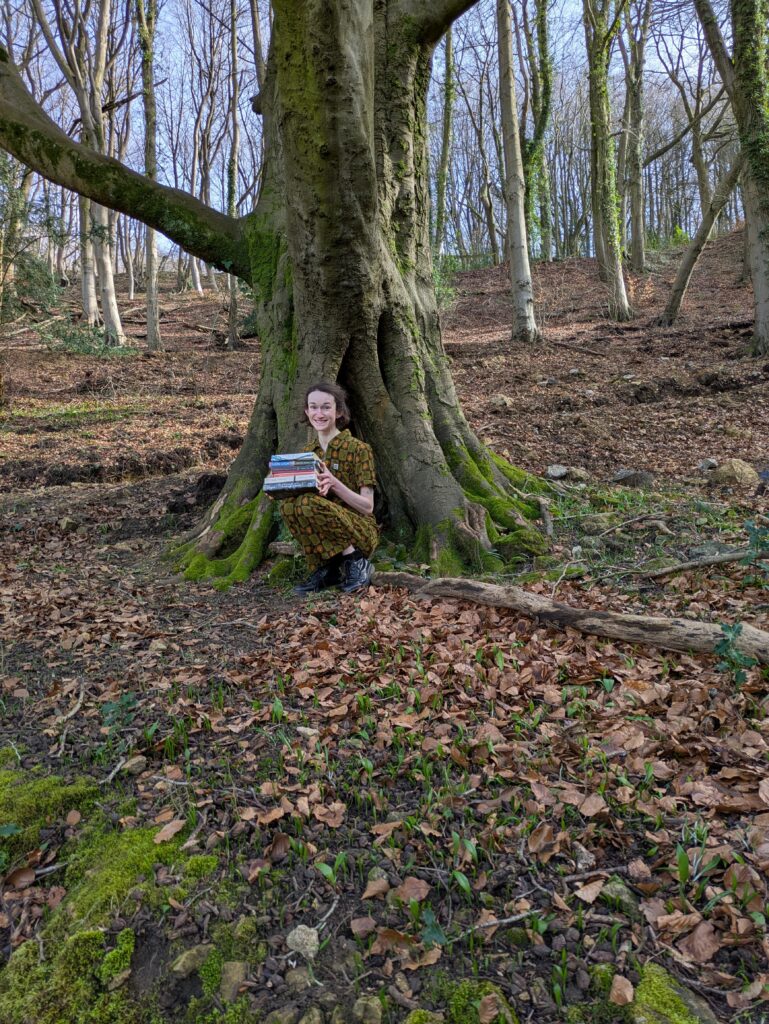
Lucky to be a bookseller at Mr B’s, I have been able to discover the most exciting selection of nature books. I’ve got my hands on copies before they were published, helped judge a Wainwright Prize, filled my own bookshelf beyond capacity, interviewed favourite authors, curated recommendations for our customers and discovered a community of writers and readers who champion this genre. The variety makes it an almost impossible task to compare my favourite books, however it’s time for a spotlight on the six nature books which have spent time on my official favourites shelf. Naturally, they are all best read outside, perched on a mossy log under the trees.
– Wildwood by Roger Deakin
One of my early heroes of nature writing, Roger’s curiosity and wonder seep into his writing. The chapters of this book are varied and unexpected, they are a collection of his travels into woods throughout the UK and across the world, meeting both trees and people who capture the personality of these woodlands. He take part in a walnut harvest, picnics amongst British bluebells, meets woodworking craftspeople, tells us of his own love of his Suffolk home and showcases the incredible biodiversity that inspires our endless love of woodland.
– The Living Mountain by Nan Shepherd
Beautifully written and highly sensory, reading this book is like stepping out onto the plateau or lying among the heather. Noticing the infinite tiny details of the Cairngorm mountainscape, Nan Shepherd chronicles her observations of the weather, wildlife and landscape that she grew to know so intimately over a lifetime of walking and living in these highlands. The way she considers how we interact with the natural world through both body and mind will change the way you see mountains and in the meantime, make you long for Scotland.
– Braiding Sweetgrass by Robin Wall Kimmerer
Scientist, moss enthusiast, indigenous voice, author and mother, Robin approaches the natural world with such appreciation and gratitude, you cannot help but feel humbled. Of Potawatomi ancestry, she is rediscovering and exploring the stories of her people. She takes lessons from her language, legends, plants, lands and elders. The thought-provoking essays include weaving of ash baskets, rewilding land, growing strawberries, tapping maple trees and tending to the fields. Enriched by her years of scientific studies and modern environmentalism, her love of the natural world creates an important message of respect and stewardship.
– Lost Rainforests of Britain by Guy Shrubsole
Forget the Amazon and the stereotypical exotic “jungle”. Much of Britain’s temperate climate is perfect for a beautiful rainforest ecosystem. Think of luscious green mosses, lichen and ferns. When Guy moved to Dartmoor and discovered small fragments of rainforest, he began a mission to identify, map and raise awareness for these amazing places. Throughout this book, he connects with ecologists, landowners, archivists, artists, the general public, and us readers. It does help that the cover is illustrated by my favourite artist Alan Lee!
– Sea Bean by Sally Huband
This beautiful book transports the reader to Shetland’s wild coastline and unique landscape: exploring folklore, history, industry, community and wildlife. Soon after moving to the island, Sally’s pregnancy triggered chronic illness. Having to adjust to physical limitations and cope with pain, she found diversion and a sense of peace when she began beachcombing the stormy shores for a “sea bean”, also known as a drift seed. This new fixation shaped her journey across Shetland, connected her the islands, helped her to self-reflect and treasure all that the tides carried to her shore.
– Late Light by Michael Malay
I’m going to remember the feeling of this book every time the sun sets. It captures the bittersweet, heart-breaking fear of losing something beautiful that you have only just grasped.
After moving from Australia to Bristol, his new landscape felt unwelcoming and strange. That is, until he grew to connect with the natural world. He became fascinated by four species groups: eels, moths, mussels and crickets. He discovered them though befriending experts, visiting their habitats and helping to survey these animals that are disappearing faster than we can find them. Through the history of these animals, he learns about our distinctly British culture and also reflects on his own life and sense of belonging: migration, adaptation, misunderstanding.
Michael’s writing is poetic and kind. He notices and appreciates that which can be easily overlooked and this book glows with a love for both the natural world and our place within it.