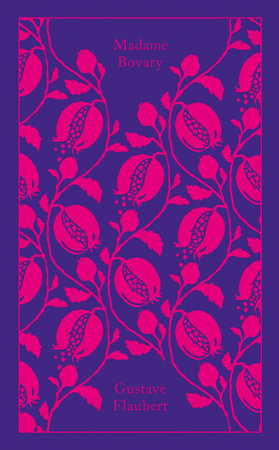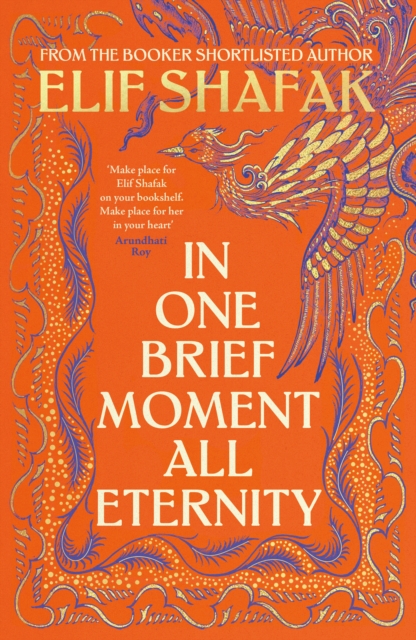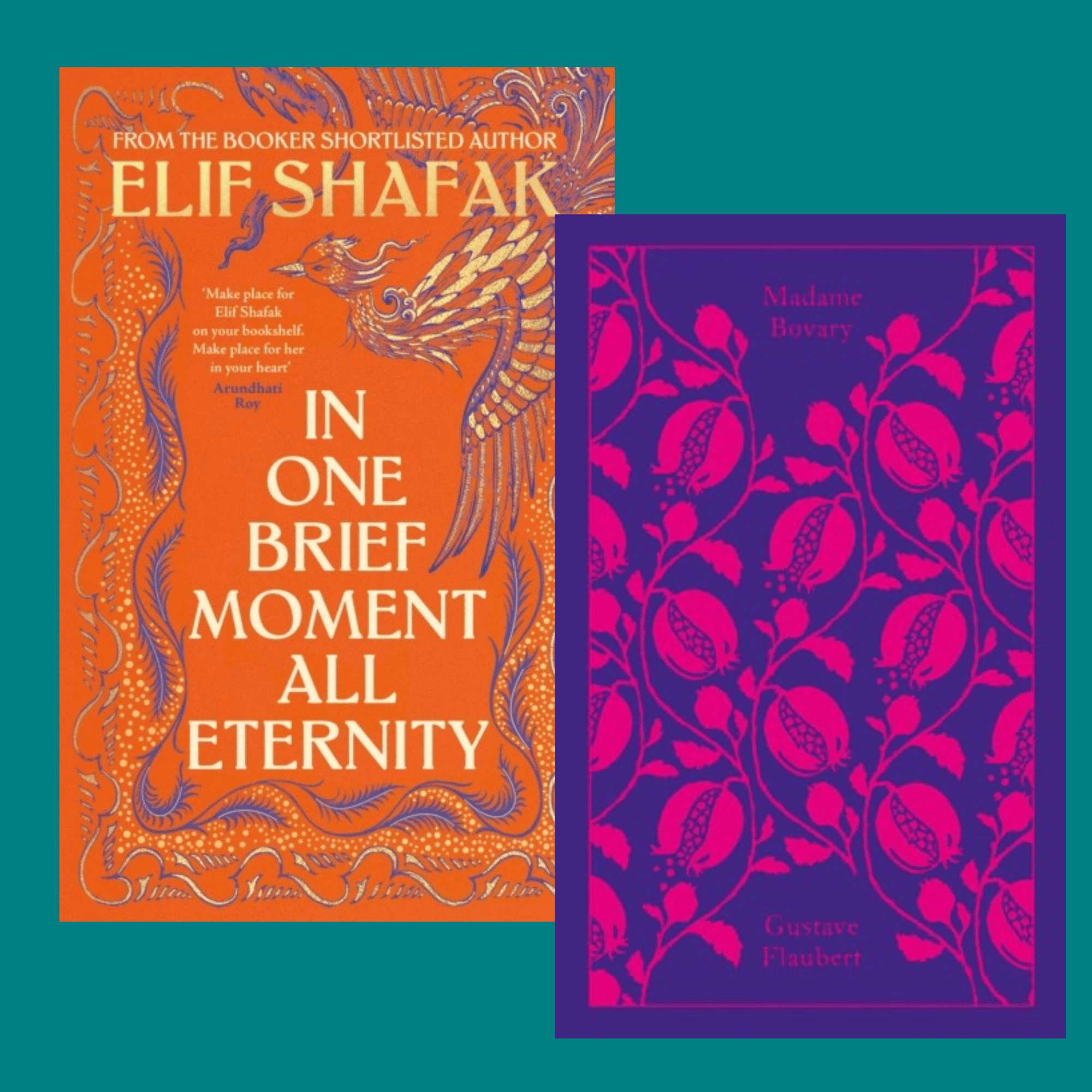
If you’re looking for a thoughtful book-coupling gift idea, I implore you to look no further than this perfect pairing – a clothbound edition of the French classic ‘Madame Bovary‘ and Elif Shafak’s astonishingly rich and powerful novel ‘In One Brief Moment All Eternity‘ based around the life of Madame Bovary’s author, Gustave Flaubert. Any reader of Shafak’s book will have an insatiable need to pick up Madame Bovary to explore the interplay between the two, so why not make life easy for them, pick yourself up some serious Brownie points and present the two together from the off! Even better, we’re offering a 15% discount when you buy both together here.
Shafak is a Turkish writer whose work we have always loved and admired. We have welcomed her in the past to events at Mr B’s and have been recommending her titles for many years, including ‘Honour’, ‘10 Minutes and 38 Seconds in this Strange World‘, ‘The Island of Missing Trees‘ and ‘There are Rivers in the Sky‘. Her first few books were written in her native Turkish tongue, but she is such an impossibly talented writer that she now writes in English in astoundingly beautiful and polished prose.
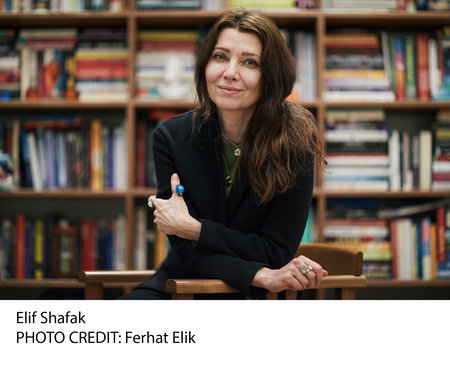
She has a passion for people in her books and often explores those on the margins of society – the outcasts, the forgotten and the downtrodden. She shines a light into the darkest corners and onto the bleakest periods of history with intense compassion and warmth and with meticulous historical research, fusing her narrative threads across multiple generations and cultures. She also loves to play around with form which I find hugely rewarding as a reader – nothing delights me more than being surprised and with Shafak you never quite know what to expect, whose voice you will hear from next – a raindrop rising from an ancient river? the dumped body of a Turkish prostitute? Or, as in this latest book, the various female voices who influenced in some way the life and work of one of France’s most celebrated authors, Flaubert.
Interspersed within the narrative of the imagined life of Flaubert are single chapters told by these women – from his beloved sister, his housemaid and Maman to the first corpse he ever encountered on his father’s operating table. We hear from his fictional character Emma Bovary herself as well as from the wife of the chief prosecutor at his censorship trial. We meet Karl Marx’s daughter, an Egyptian circus performer and a lady innkeeper. In Shafak’s inimitable humorous, original style, Istanbul is given her own voice, as is Syphilis, a disease which plagued him throughout much of his life. Each voice explores her personal interaction with Flaubert and dissects the role she played in shaping him, his characters and his beloved novel, Madame Bovary.
Through this ingenious construct, we get to see France through the turbulent 19th Century – through revolution, disease, war, censorship, scandal, poetry, and literature. We escape, along with Flaubert, to the banks of the Nile and to the dusty souks of Istanbul. Via brothels and stinking streets to stifling aristocratic drawing rooms, a vivid image of Europe’s women emerges, of those trapped, enslaved but fierce and full of heart. We see Flaubert himself, a complex man who was compassionate and kind but full of self-doubt, who lived inside his own imagination and troubled mind, his intense desire and need to write eclipsing all else.
I have finished the book and I am now desperate to delve straight into Madame Bovary itself. I can’t wait to explore the interplay between the two novels – to see how Shafak has interpreted the novel, which characters she has used for her book, which leitmotifs and threads throughout the book she has plucked and woven into her own. Doubtless that will lead to some reading on the “Paris Commune”, and then to more novels that were influenced by Flaubert’s works…and then perhaps to a biography of some French women during this era…..and on it will go, in that rabbit-hole way that one inspiring book has of taking you down endless new exploratory paths.