Welcome to the final Dust Jackets of 2026 – where Mr B’s booksellers dig up great books from the archives. To round off the year, Tom resurrects a great Hungarian writer, Emma finally gets round to a book Ed has been recommending her for a decade, Soffi unearths a Charco Press gem, Liv finds love with a frog-man, and Ronnie larks about with E. Nesbit…
‘A reading experience like no other’
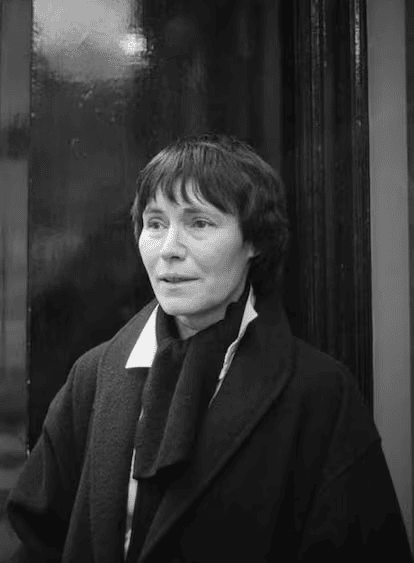
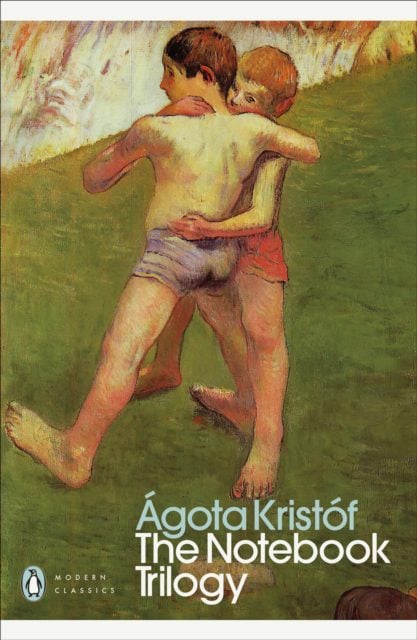
Every so often, maybe once a year if you are lucky, a book drops into your hands that rocks the centre of your being. A book that in an instant makes you that annoying person who goes on and on and on about it to everyone you know. Sends you into a tailspin of obsession, forces you to immediately buy everything the author has ever written, no matter the cost. For the first time in a while, that has happened to me. The book: Ágota Kristóf’s The Notebook Trilogy.
Kristóf was born in Hungary in 1935, her childhood dominated by World War II, where occupation by the Nazis was swiftly replaced by a Soviet invasion that brought equal horrors. In 1956, during the doomed Hungarian Revolution, Kristóf, now 21 and married and with a baby in tow, fled on foot across the Austrian border, where she became divorced from her country and her language. This would go on to shape her writing thereafter. In her slim memoir, The Illiterate (CB editions, 2022), she recounts: “… that day, that day at the end of November 1956, I lost forever my sense of belonging to a people.”
Eventually resettled in the French-speaking Swiss town of Neuchâtel, she was forced to abandon Hungarian as a practical language for her writing, and learn French from scratch. After some local success with poems and plays, her breakout came in 1986 with The Notebook.
Set in a forgotten village in the corner of what we assume to be Hungary under Nazi occupation (no towns or real events are named in the book), she tells the story of twin boys, Claus and Lucas, sent by their mother to live with their grandmother. Known as ‘The Witch’ for allegedly poisoning their grandfather, she is an outcast in this place, a woman who buries her money under the window and forbids the twins to enter her bedroom, who rents rooms to occupying soldiers, who beats the boys and calls them “sons of a bitch”.
Their response: to destroy the ladder to the attic, leaving a rope only they can climb up, thus giving them the freedom and space to care for themselves. From here, the twins (the novel is all narrated from the point of ‘we’, so indistinguishable are they from each other) begin exploring the town and its disturbed, depraved folk, while educating themselves using bizarre techniques to toughen their bodies and minds against the rigors of wartime life. What they find is a cold cruelty exacted by a people for whom normal rules have been suspended by conflict.
It is not only Kristóf’s unflinching eye to the horrors of humankind that sets this novel apart from its peers – it is also the language she employs. Employing French – her ‘enemy language’ – she tackles the brutal subject matter with a spare and clinical clarity that only fuels its remarkable power. The excellent translation (by Alan Sheridan, 1989) perfectly reflects her simple, stark sentences. Published in this new edition, Penguin Classics have also included the other books in the trilogy, The Proof and The Third Lie (both translated by David Watson), which continue the boys’ story after the shocking, unforgettable conclusion of The Notebook. Taken together, they are among the great works of the twentieth century and produce a reading experience like no other, by an author like no other. Kristóf died in 2011 and there is not a huge amount of her work available in English: what there is will change your view of humanity.
By Tom Mooney
The Notebook Trilogy is out on November 5 – order here!
Step Inside the President’s Room
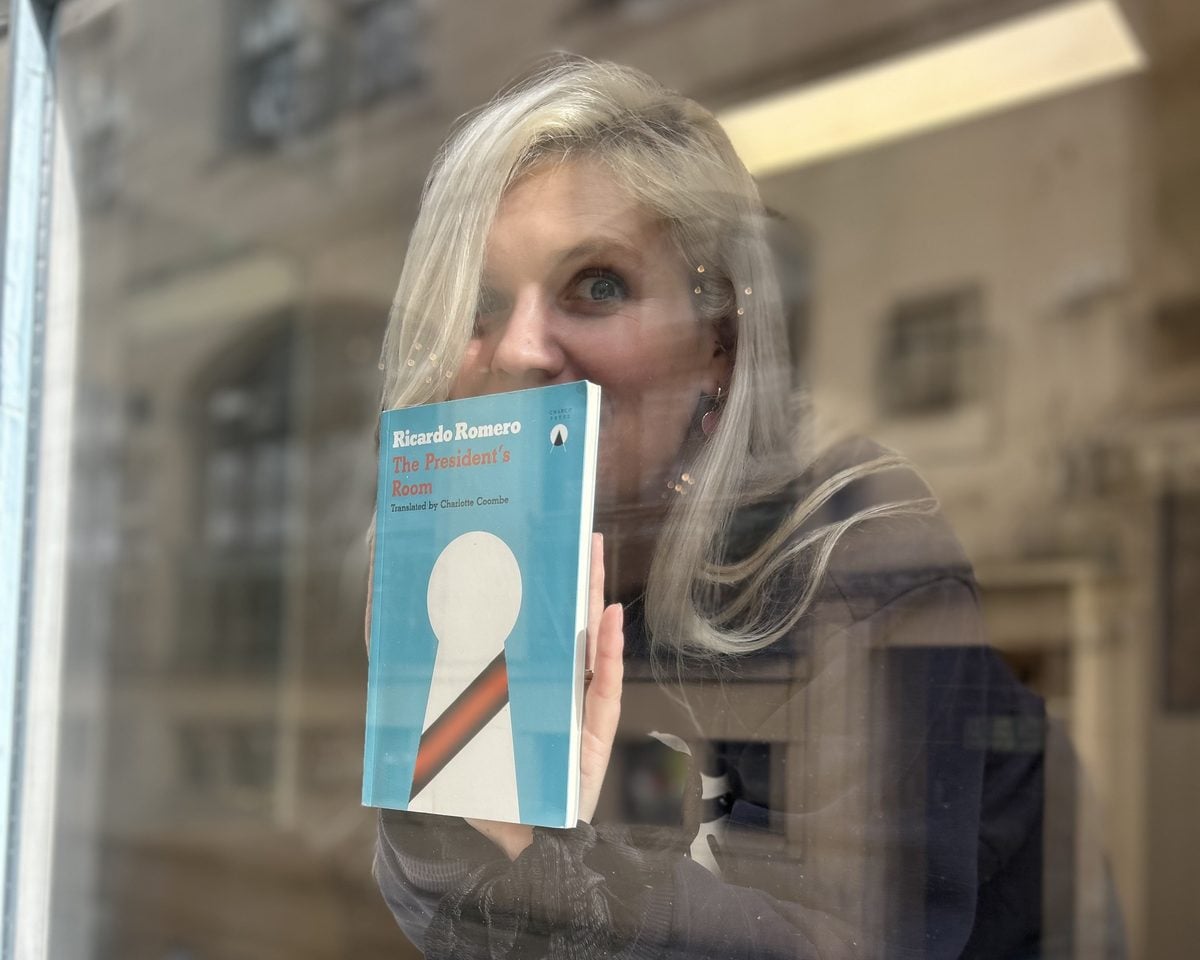
Soffi reviews The President’s Room by Ricardo Romero…
In an unnamed town in an unnamed country, basements have been banned, and everyone’s house must have a room for the President. Our middle child narrator obsesses over this room he can’t enter. He sometimes climbs the laurel tree outside to get a peek in. His mother cleans the room once a week. His little brother has fevers and often goes missing. Our narrator spends a lot of time in the attic, wondering if the president will ever visit.
The sense of menace and foreboding is palpable, and the allegory of the president’s room suggests a country controlled by the panopticon of power – rumours abound that people are changed, for better or worse, if the president enters your threshold. This mysterious tale, one of the first publications from Charco in 2017, narrates the metaphysical hypothesis that each house is never just one single home…A strange, uncanny novella reminiscent of Kafka and Saramago, for anyone who is happy sitting in the symbolism and reading between the lines.
By Soffi James
Order The President’s Room now!
Frog-Man Love
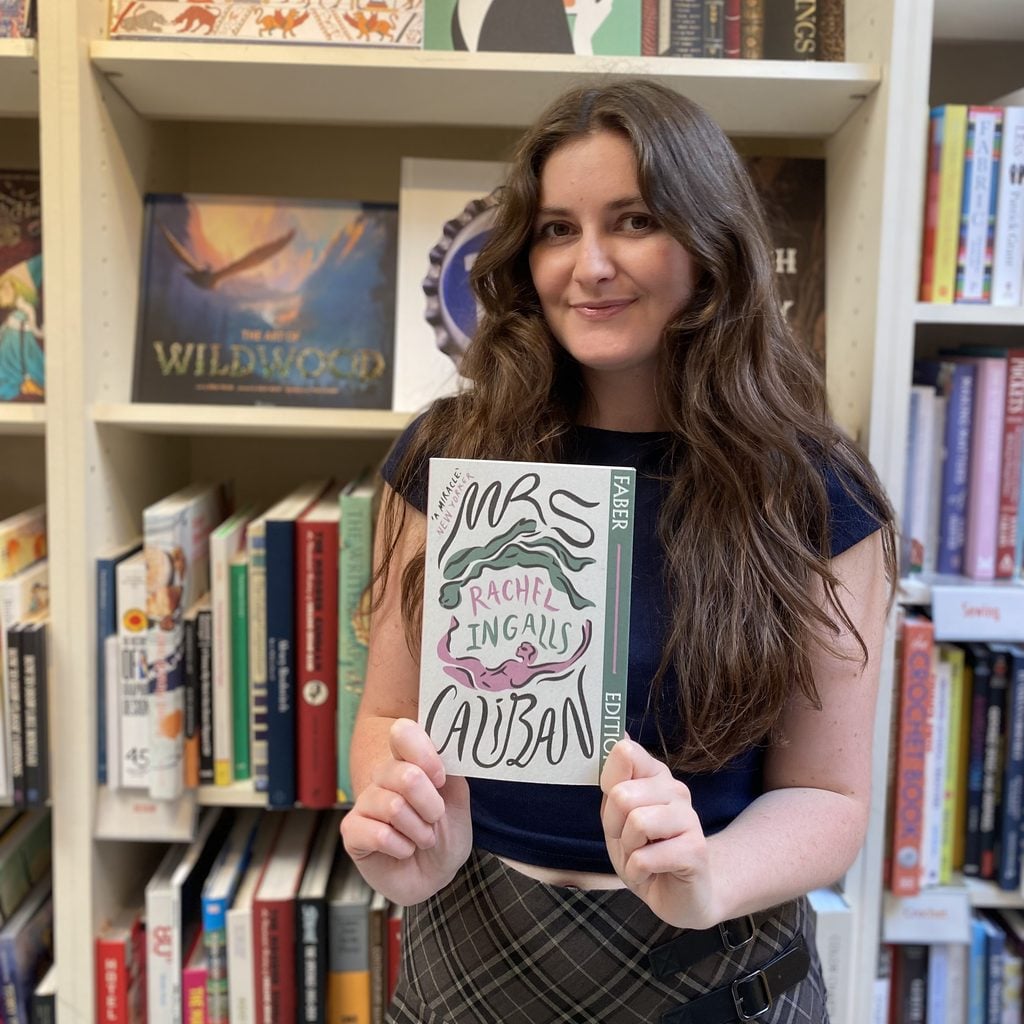
Liv reviews Mrs Caliban by Rachel Ingalls
Get ready to fall in love with a giant, sexy… frog-man? Mrs Caliban is the ultimate (and maybe original?) monster romance, featuring a neglected housewife in Suburban California, and the freaky amphibian creature who turns up in her kitchen. Surreal, compelling, compulsive – this republished 80s classic offers both an incisive exploration of sexual agency and some truly bizarre bonking. Perfect for fans of Miranda July, Melissa Broder, and Sky Daddy by Kate Folk!
By Liv Burness
Larking About
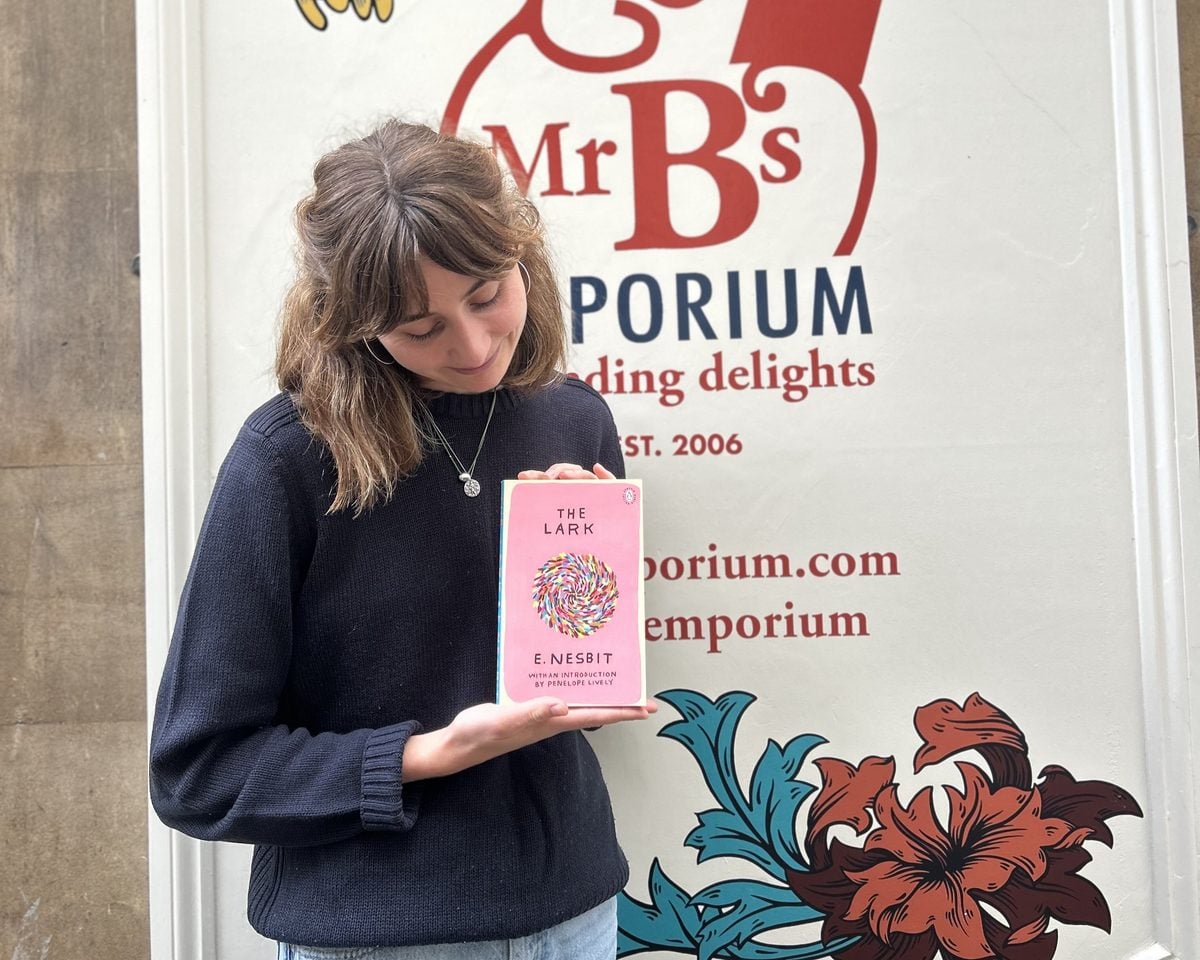
Ronnie reviews The Lark by E. Nesbit
The Lark is the literary equivalent of high tea: delicious, elegant and cosy all at once. It is 1919. Our heroines are young cousins Lucilla and Jane, who find themselves suddenly impoverished, cast out from boarding school and living in a cottage near an abandoned manor house, Cedar Court. After a bit of curious trespassing, they set off a chain of events which leads to them collecting a motley crew of outcasts and peculiar characters as they try to scrape together a livelihood selling flowers and taking in paying guests. A classic comedy with handsome gardeners, mistaken identities, miscommunications and a bit of light witchcraft, perfect for anyone who loves I Capture the Castle, Eva Ibbotson, or Lucy Carmichael.
By Ronnie Powell-Smith
An Outside Favourite
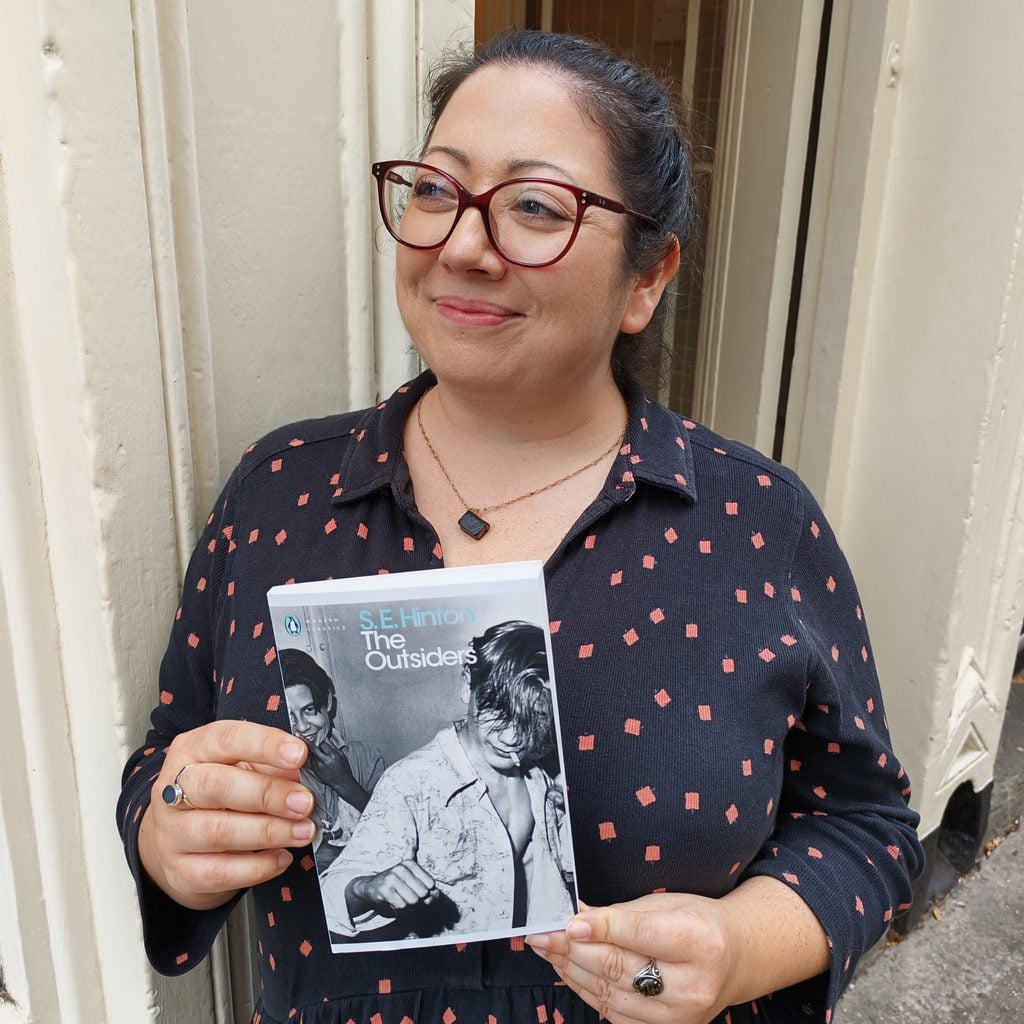
Emma reviews The Outsiders by S. E. Hinton
If you’ve ever visited Mr B’s there is a high chance you will have met my colleague Ed, and an even higher chance that he will have thrust a book upon you and told you how you absolutely must read it, how he can’t believe you haven’t read it before, and just how much you’re going to love it. I’ve worked at Mr B’s now for almost 15 years, and I think The Outsider by S. E. Hinton is one of the first books that Ed told me I had to read. So of course I half listened to him and it’s sat on my shelf unread all these years whilst I read hundreds of other books. Until now. It turns out, I should’ve listened to Ed because The Outsiders has immediately become one of my favourite books of all time.
Published in 1967, and written by S. E. Hinton when she was just 17 years old, The Outsiders is a novel of youthful rebellion and class divides, one that seeks to challenge the stereotypes. It follows two rival gangs in Oklahoma – the upper-middle-class Socs, and the working-class Greasers, including 14 year old chain-smoking Ponyboy, his brothers Darry and Sodapop, and his best friend Johnny. When Ponyboy and Johnny get caught up in a murder, they find themselves on the run, and their lives forever changed. I laughed and I cried and honestly couldn’t bear to leave these characters behind once I’d finished. And lesson learned…if you have a book on your shelf because Ed told you you’d love it, pick it up now!
By Emma Smith