
Welcome to this month’s edition of Dust Jackets, where our Mr B’s booksellers show some love to old books and backlist titles.
This month, Tom ressurects the cult novelist B Traven, now back in print for the first time in decades, and Soffi discovers one of the cornerstones of Weird Fiction…
A Cult Novel Resurfaces
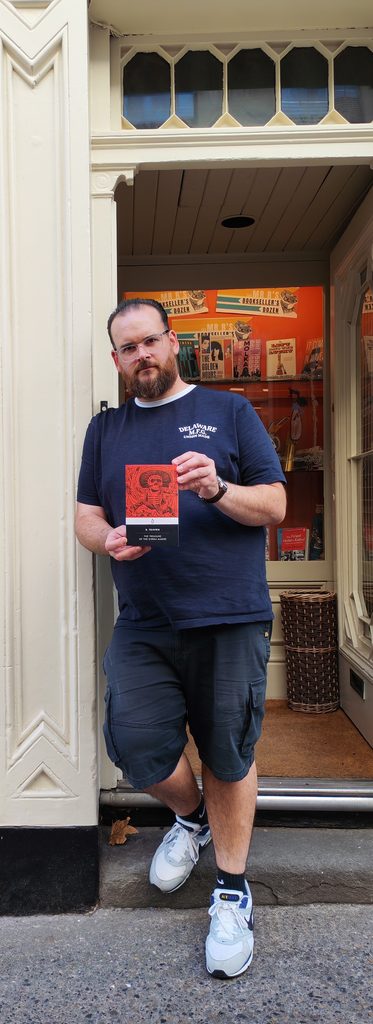
When the US author Willy Vlautin came to Mr B’s in June we asked him to curate us a list of his favourite books. Willy was delighted to oblige and the list he gave us was full of titles I had already read and loved – Pedro Paramo, Small Things Like These, True Grit… and then the list ended with a curious addition that sparked something in the back of my mind. A book long out of print in this country but one I had heard mentioned over the years by other writers: The cult novel The Treasure of the Sierra Madre by a certain B Traven. As luck would have it, Penguin Classics were due to release this, plus a couple of other Traven titles in August. I ordered myself a copy. A couple of weeks ago the book dropped through the door and I tucked in immediately: it is the best book I have read all year.
The legend of B Traven himself is as enticing as his books. For a start, there’s no consensus on who he even was. He once wrote that “the creative person should have no other biography than his works.” Never mind one biography, Traven had several, each wilder than the last. Probably born in Germany (though Traven in a rare interview hinted maybe even that wasn’t true), there were rumours he was the son of Wilhelm I, that he was the illegitimate son of an Irish actress, that his father was the founder of AEG. What seems to be sure is that he was sentenced to death in Germany for his part in the Bavarian Revolution in the early 1920s and escaped to Mexico, where he lived the rest of his life until his death in 1969. Here he began writing stories and novels under at least a dozen different pen names.
Among his early works was The Treasure of the Sierra Madre, an adventure story and satirical fable of greed and exploitation, published in 1927 though has until now remained our of print in the UK for decades. It was made into an Oscar-winning film by John Huston in 1948. Opening in the fashion of Steinbeck’s Cannery Row, we find the tramp Dobbs, an American begging and scheming his way around a Mexican oil town where the pumps are beginning to run dry. Dobbs and a pal, Curtin, sit on their bunks in the shack they sleep in, hearing the tall tales of Howard, a former prospector who claims there is a huge gold mine in the hills that was barely touched before being filled in. If only someone was brave enough and tough enough to go find it. The three hatch a plan to head into the Sierra Madre mountains and make their fortune – a trip that is doomed from the start.
This is not just a novel, not just a neo-western, but a tall tale filled with other tall tales. Exciting, witty, tragic and tough, this deeply satisfying novel marks Traven as a storyteller in the tradition of Steinbeck and Jack London: a writer with a keen ear for dialogue, a talent for placing exuberantly-drawn characters in a harshly depicted landscape, and one with a strong social conscience. The Treasure of the Sierra Madre is ferociously readable and entertaining, and old fashioned in all the right ways and not too many of the wrong ways.
In his essay Writers Lost in the Distance, the great Chilean novelist Roberto Bolaño lamented the sad fact that Traven was not better known: “…other writers, like Henry Miller or Artaud or B. Traven or Tristan Tzara, writers who contributed to our sentimental education and who are now impossible to find in the depths of bookstores for the simple fact that they have hardly any new readers.” Well, Traven can now count at least one new reader. I only hope he finds many more.
By Tom Mooney
Buy The Treasure of the Sierra Madre now!
A Seminal Text For Weird Fiction Fans
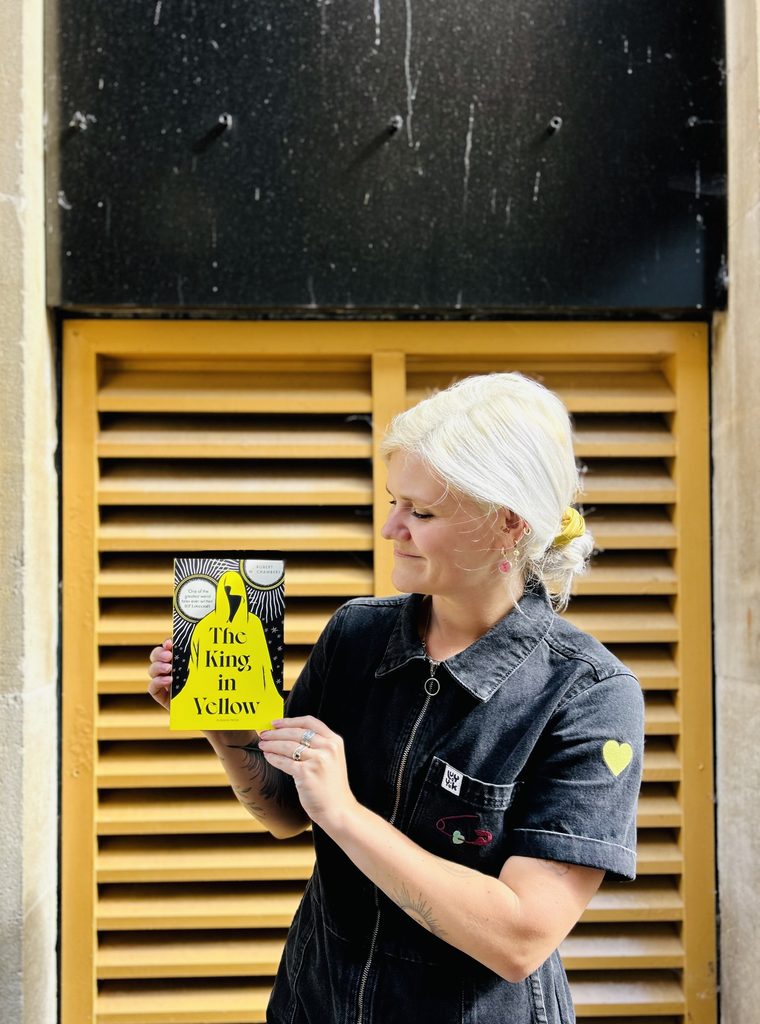
Can art drive a person insane? This is one of the questions Robert W. Chambers asks in this collection of weird stories, The King in Yellow, which holds its own against the likes of Hoffman and Poe.
The first story, written in 1895, describes a dystopian 1920s fascist America where suicide has been legalized with “Lethal Chambers” being rapidly rolled out across every town and city. Amongst this terrifying reality, our narrator Hildred, who has suffered a head injury after falling from his horse, comes across a copy of The King in Yellow – a play that when read purportedly turns its readers mad. Hence follows a horrible and fantastical descent into madness, where he meets a fingerless, earless man called the Repairer of Reputations, and a vicious cat. And things get even more sinister from there.
You can see this short story’s influence across weird fiction that came after, and his unreliable narrator seems to be the template upon so many of my favourite characters are set, with the writing feeling uncannily modern despite being written over a century ago. This is a wildly under-appreciated, seminal text for Weird Fiction fans.
By Soffi James