Welcome to a seriously BUMPER edition of the Deep Read, stuffed full of bookish news from the Mr B’s team and beyond. Read on for a Mary Oliver poem, a Q&A with Lucia Odoom, Sam’s thoughts on Nick Hayes’s new book and much more!
Mary Oliver Joins Penguin Classics
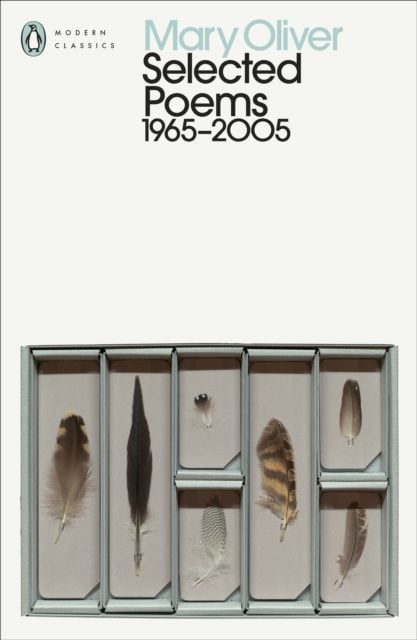
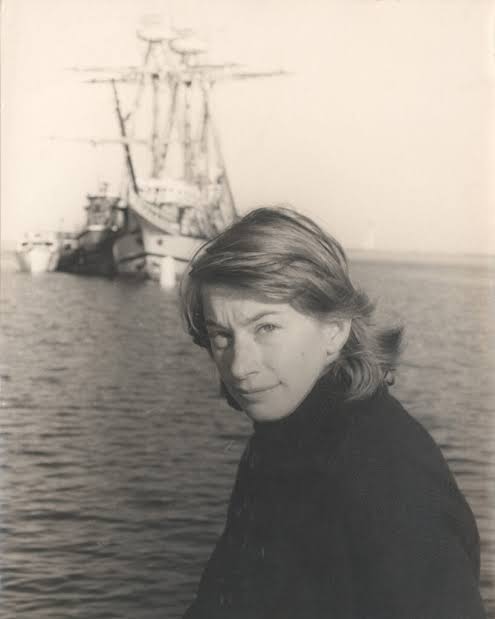
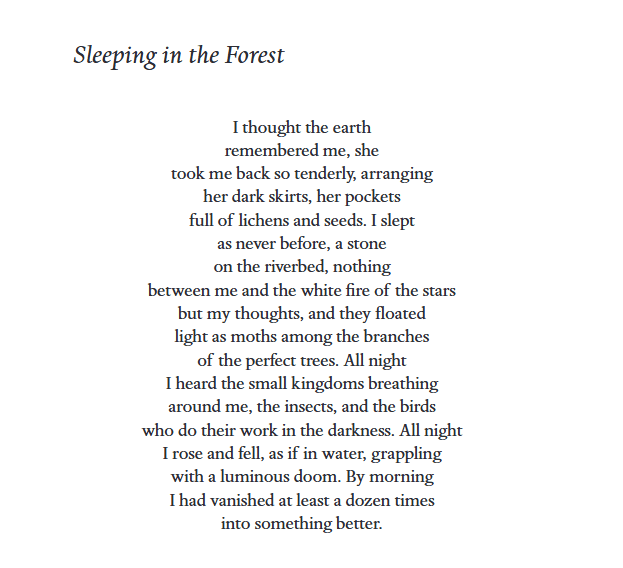
Mary Oliver, one of the great poets of the past century, has joined the Penguin Classics list. Selected Poems: 1965-2005 is out now and features some of her most beloved works. To celebrate, we are delighted that the publisher has allowed us to print one of her most beautiful works in The Deep Read.
Buy Selected Poems: 1965-2005 now!
Q&A with Lucia Odoom
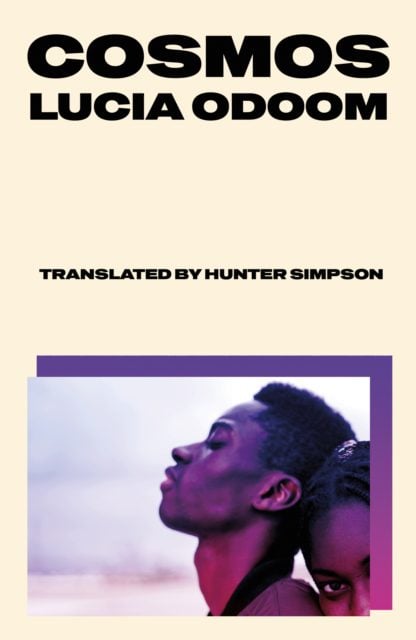
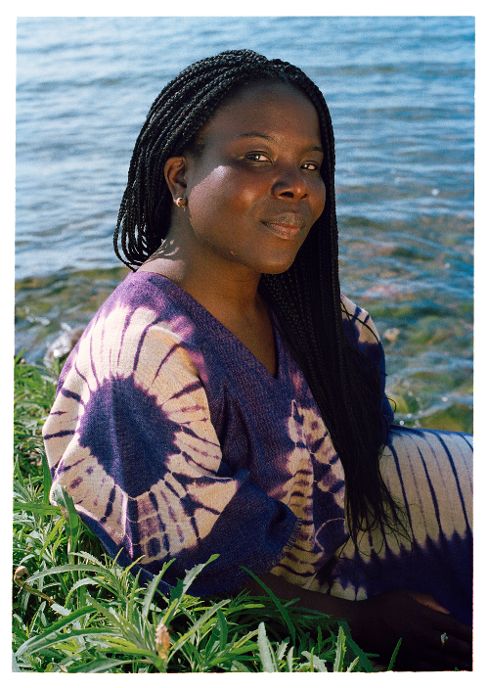
Lucia Odoom is a journalist, broadcaster and author based in Copenhagen. Her searing debut novel, Cosmos, is composed of WhatsApp messages sent back home by a Ghanaian immigrant scratching out a living as a bottle collector in the Danish capital. We were delighted that Lucia took the time to sit down and answer our serious (and not so serious) questions about life and literature…
You are on a long train journey but can only take one book. Which of your existing book collection would you choose to take to re-read?
Dependency (originally titled Gift in Danish, and Gift means both Married and Poison in Danish) is the final, searing volume of Tove Ditlevsen’s autobiographical Copenhagen Trilogy. Published in 1971, the memoir explores her early literary success, four turbulent marriages, and a severe, near-fatal addiction to Demerol. I discover something new every time I read it.
What’s your favourite place/song/film?
Place: Copenhagen is my favourite place. Song: Nina Simone Poppies. Film: John Cassavetes’s A Woman Under the Influence.
Where do you do most of your reading?
In my bed and in coffee shops
What is on your “to be read” pile currently?
Mare Kandre’s Bübins Kid, Djuna Barnes’ The Head of Babylon and Other Short Stories, Georges Perec’s Things: A Story of the Sixties, and a lot of Danish debut poetry and novels. I’m reading them to prepare for interviews at this year’s Louisiana Literature Festival at Louisiana Museum of Modern Art.
What would your Mastermind subject be?
Longing.
When you visit a bookshop, which section do you go to first?
Fiction. I wish I were the kind of person who went straight to the classics, but I just love new novels.
What three words on a book blurb would make you want to pick it up?
I think picking a book is a bit like picking a date, I need to be picked up by the book, it needs to make me feel kind of special. My friends usually introduce me to the difficult books. I’m drawn to words like original, sharp and deeply moving. And if Sheila Heti or Olivia Laing wrote the blurb, that definitely helps. Although it’s really all about mood and context.
What was the last book that made you laugh or cry?
I was really entertained by Jennette McCurdy’s Half His Age. It was much funnier than it had any right to be.
What did you do before you became an author?
I still work as a cultural critic, journalist and weekly podcast host, and I’ve been doing that for the past 11 years. Before that, I was a radio host at the Danish Broadcasting Corporation. I hope I’ll one day be able to afford to write full-time, but I also hope I’ll keep making my podcast for the rest of my life. People seem to really enjoy it, and I love doing it.
The ultimate dinner party – who would your top three guests be?
Virginia Woolf, James Baldwin and David Bowie. I think we would all get along.
Cosmos is published by Daunt Books and is available now – click here to buy your copy!
Longing to Belong
As the summer holidays draw to a close I’m beginning to anticipate the school-gate small-talk about how we enjoyed, or endured, the past six weeks. I’m beyond lucky to have a large family whose various branches are happy to host my son for a week at a time, so that my wife and I can work while he’s spoiled elsewhere. And there’s a continuity between his experience and mine: I spent a week each summer with my great-aunt and uncle, who lived on Dartmoor and had chickens and horses and a completely different way of life. I loved every minute, but I was only ever a visitor to the countryside, never a part of it.
For many of us, our relationship to the countryside and the natural world more broadly will be similar. We enjoy a bracing walk along public footpaths, we appreciate a picturesque landscape, we buy something tasty from the farmers’ market. We interact as a consumer.
For many of my favourite nature writers, their relationship to the countryside is entangled with ownership, custodianship, and economics. And they scarcely agree on what a healthy or ‘natural’ landscape looks like, or what it means to belong there.
James Rebanks (The Shepherd’s Life) believes that belonging is shaped by continuity and work: the Lake District has been shaped by generations of farmers and shepherds, and their landscape and their custodian relationship with the landscape is worth conserving.
Isabella Tree (Wilding) and husband Sir Charles Burrell see the natural world as an ecosystem threatened by too much human control: rewilding through human intervention is necessary to make land viable again, not only ecologically but economically. On Knepp Farm and Boothby Wildland, Tree and Burrell demonstrate that the landowner can be an excellent custodian; but of course they’re also making money through ecotourism, nature-centred wellness interventions, government subsidies for Biodiversity Net Gain Units, and free-range meat and vegetable farming. Without an economic incentive, neither landscape is viable.
Nick Hayes moves beyond these descriptions of rural custodianship into questions of rural ownership. He questions whether private ownership of almost all the rural land in England is good for the people or the land. His arguments take us beyond the consumer relationship with the natural world to a deeper, more entangled, more reciprocal relationship.
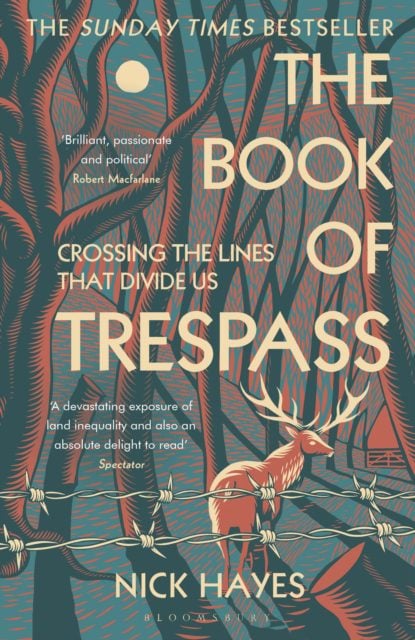
In The Book of Trespass, Hayes laid out the history of enclosure and exploitation of the English countryside. He has since worked with Guy Shrubsole on the Right to Roam campaign, which envisions a future in which people not only enjoy the benefits of nature but also act as its guardians.
But do we know the countryside well enough to be its guardians? Can we build a relationship with the natural world if we have no ownership of it, no agency over it? And how was this relationship broken in the first place?
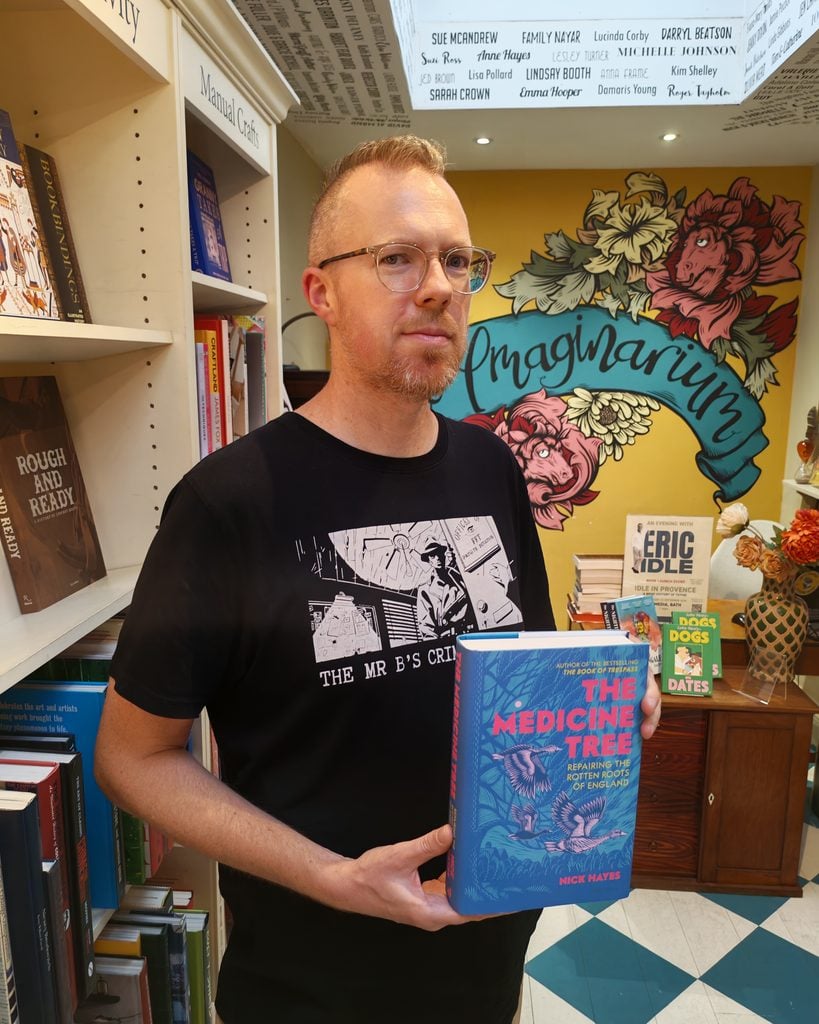
Hayes wrestles with these questions in his vital new book, The Medicine Tree: Repairing the Rotten Roots of England. Over nine months living on the radical Hardwick Estate in Oxfordshire, Hayes explores the complex entangled histories of colonialism and enclosure, and describes the tentative roots being put down by Hardwick’s bohemian, working-class rural community.
Hardwick is a fascinating test case for universal land reform. The estate’s owners are in the process of voluntarily rescinding their titles and land, and are currently trying to transfer ownership to a community-led charitable structure. Hayes spends time alongside the burgeoning community’s members: the Carver, the Dyer, the Bronze Caster, the Music Teacher, the Hemp Growers. All of them have a relationship with the working countryside, a different way of working on and with the land, that doesn’t necessarily work in concert with the profit motives of private landowners.
Beyond the topic of the working countryside Hayes delves into lost English land culture–which he argues is vital to understanding our ancient relationship with the land–and into the politics of ethno-nationalism and conflicting visions of what constitutes a pure England.
The Medicine Tree is a vital, expansive read. If, like me, you’re leaving the summer break behind and want to reengage with consequential ideas and discussions, come to our event with Nick Hayes on Monday 28th September.
By Sam Drew
Click here to book tickets to our event with Nick Hayes!
Bookseller Venn Diagrams: Rosa and Laura GM
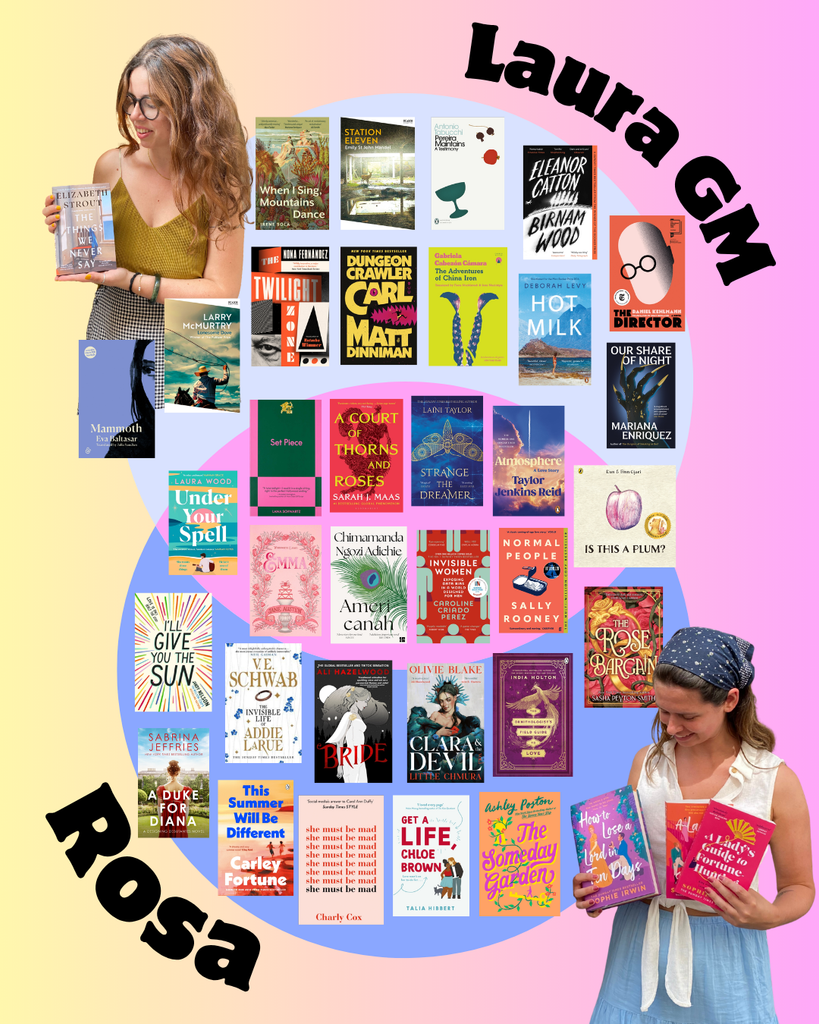
Ever wondered which of the Mr B’s team you share a similar reading taste with? Well, so have our booksellers. They’ve taken it upon themselves to track down their bookish bestie, and figure out where the overlap lies. This time, we’ve got Laura GM and Rosa…
LGM and Rosa are having a meet-cute in the middle of the venn diagram, as their shared reading taste sees them both drawn towards romance fiction and epic love stories. Shop favourite Laura Wood features with the romcom of our dreams, Under Your Spell, as well as Taylor Jenkins Reid‘s outer space epic, Atmosphere, and Sally Rooney‘s complicated coming-of-age, Normal People. But their shared interests also overlap with a continent-spanning tale from Chimamanda Ngozi Adichie, heart-pounding fantasy from Sarah J Maas and Laini Taylor, and hard-hitting feminist non-fic from Caroline Criado Perez.
But where Rosa’s gone all-in on the romance, falling head-first for some contemporary YA dramas, gorgeously rendered graphic novels, historical romps, and poetry collections about modern love affairs, LGM’s been doing some armchair travelling, following her love of translated fiction all around the world: Argentina, Chile, Germany, Portugal, Italy, and (of course!) her native Catalonia. Plus the entire Dungeon Crawler Carl series, thrown in for good measure!
The Mysterious Bookcase
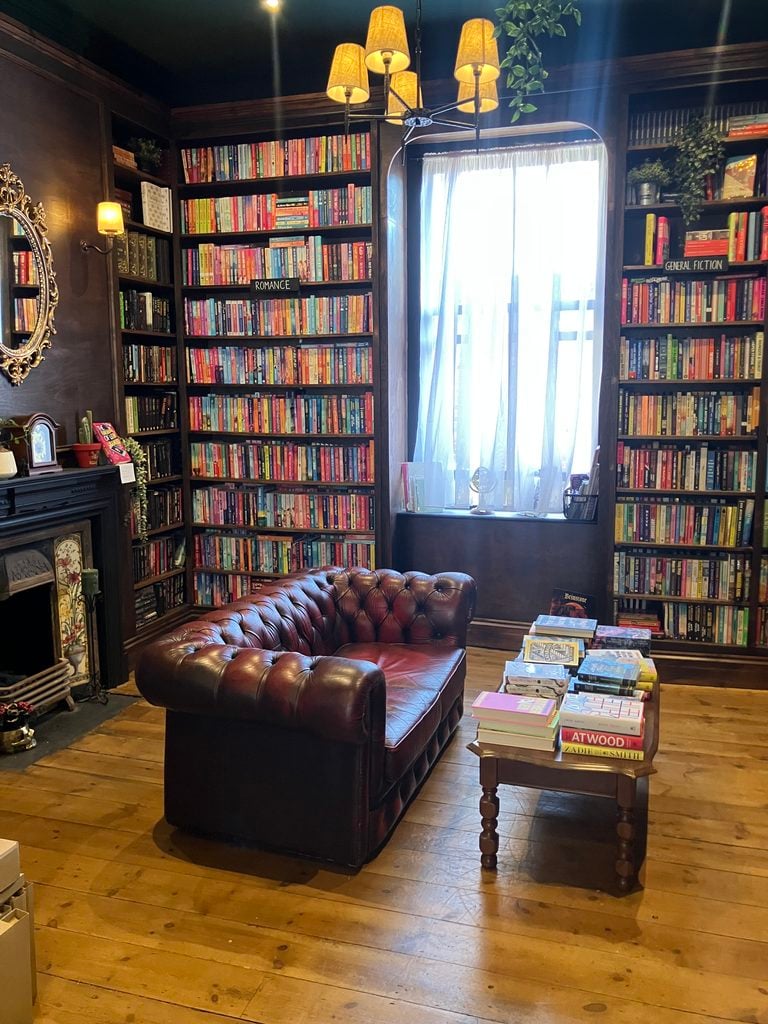
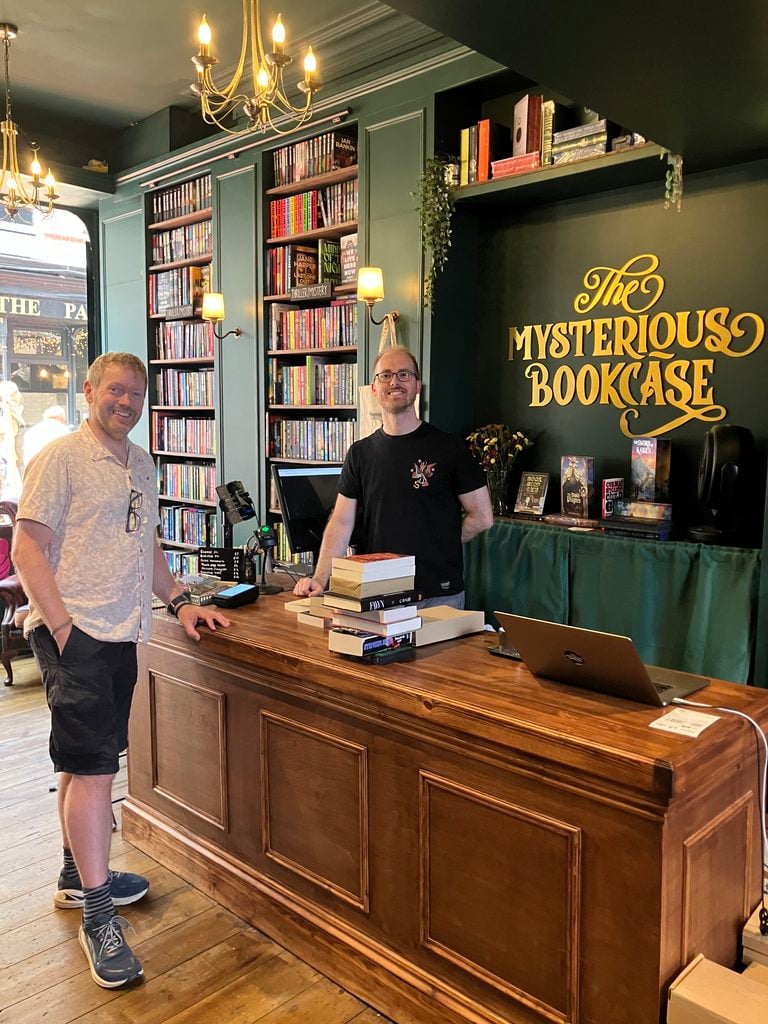
Nic and Juliette (Mr & Mrs B) and the rest of the family all popped in to The Mysterious Bookcase last week when on a day trip to Bournemouth. They met owner Matt – he and co-owner Ally set up last year in a beautiful Victorian arcade in the town. It is really charming with beautiful decor, well curated stock and some great merchandise! Pay them a visit if you are in the area, or you can check out they have to offer by clicking here!
Consider the Wondrous Festival
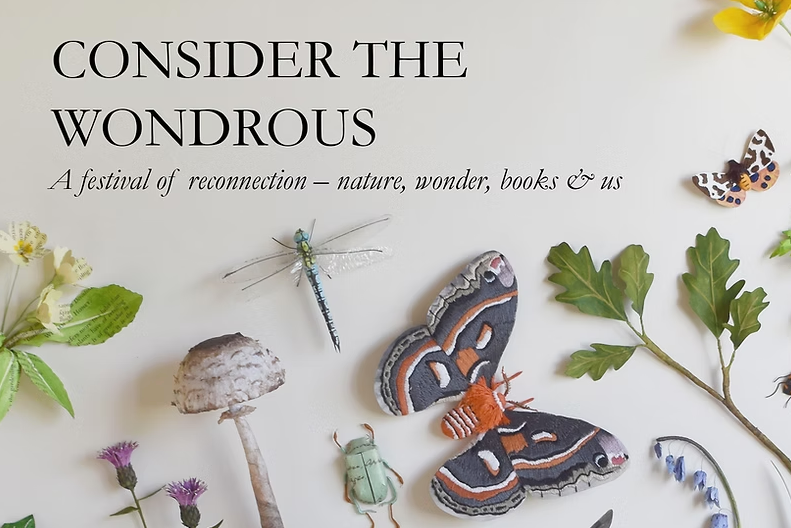
We’d love to give a shout out to a great new festival of nature and books – Consider the Wondrous! The festival is happening in Frome, Somerset, later this month, and they have some fab author events lined up, including Julia Samuel, Stephen Moss, Dara McAnulty, Cal Flynn and many more.